How to Fix a Weak Job Application
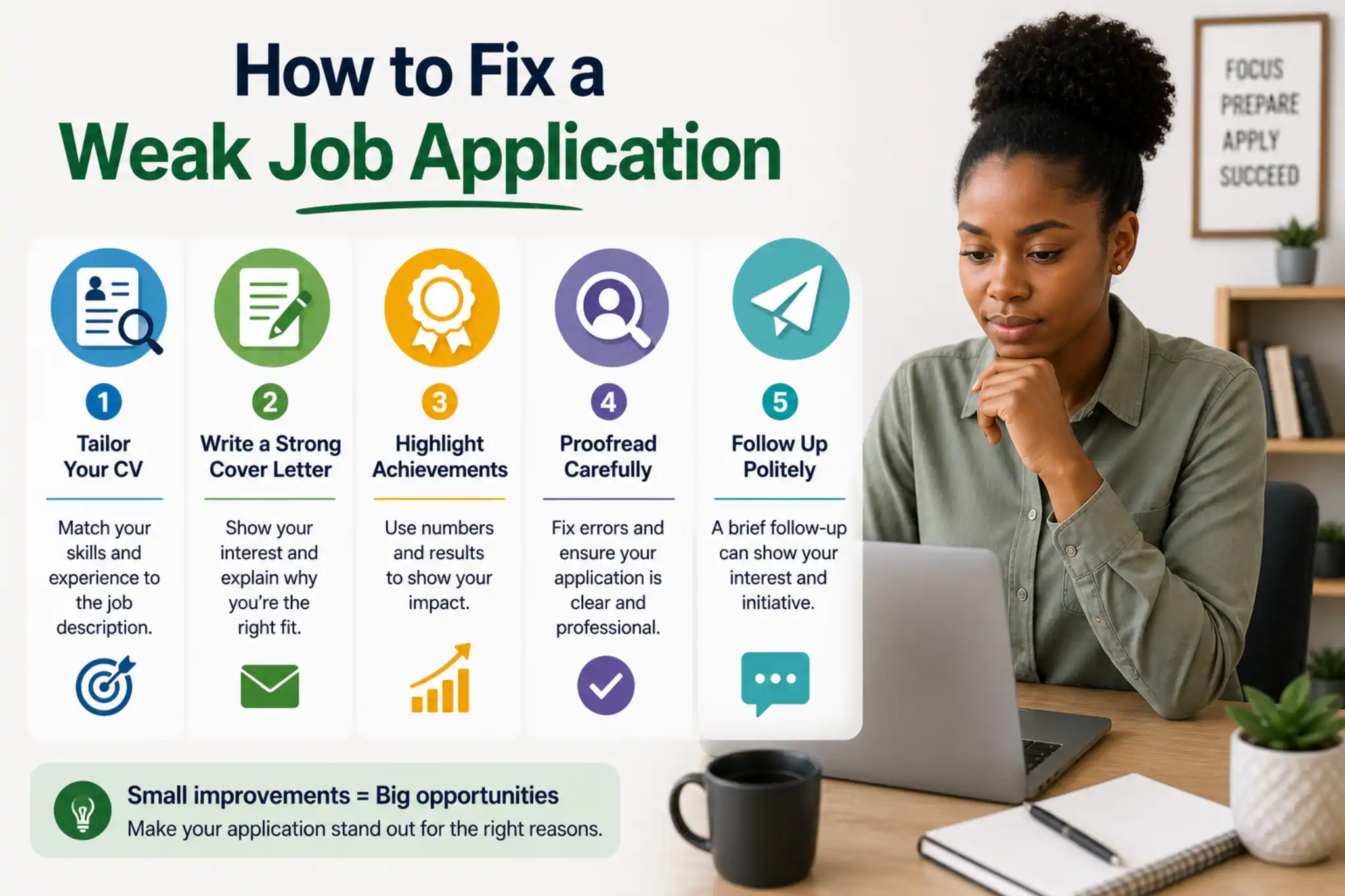
Quick Answer
Learning how to fix a weak job application can improve your chances of getting responses, interviews, and better opportunities. A stronger application usually includes a professional CV, tailored information, clear communication, relevant skills, and fewer mistakes. The best approach is to improve your application strategy gradually while applying through trusted platforms like JobTree.
Table of Contents
- What Makes a Job Application Weak
- How to Improve Your CV
- Why Tailoring Applications Matters
- How Professionalism Improves Applications
- How to Build a Stronger Candidate Profile
- Final Advice for Better Applications
- Frequently Asked Questions
What Makes a Job Application Weak
How to Fix a Weak Job Application is important because many job seekers apply repeatedly without understanding why employers are not responding. A weak application is usually one that fails to show the employer why the candidate matches the role clearly. Even hardworking applicants can struggle if their applications are poorly presented.
One common problem is sending the same CV to every employer without making changes for different jobs. Generic applications often look unrelated to the vacancy and make it difficult for recruiters to see relevant skills quickly. Employers usually prefer applications that feel connected to the role they advertised.
Weak applications may also include spelling mistakes, poor formatting, missing documents, or unclear information. These issues can create a negative first impression even when the applicant has useful experience. Professional presentation matters because recruiters often review many applications quickly.
Another issue is applying for roles that do not match your background or skill level at all. While it is important to stay hopeful during job searching, applying randomly can reduce your chances of success. Strategic applications usually perform better than large numbers of untargeted applications.
Many weak applications also fail because they do not explain value clearly enough. Recruiters want to understand how your skills, experience, and abilities can help the company. If this connection is unclear, your application may be ignored.
How to Improve Your CV
The seed keyword how to improve your CV is important because your CV is often the first thing employers see about you. A strong CV should be clean, organised, easy to read, and focused on relevant experience. Recruiters should quickly understand your strengths within the first few seconds.
Start by improving the structure and readability of your CV. Use clear headings, professional fonts, and simple formatting that makes information easy to scan quickly. A cluttered or confusing layout can reduce your chances immediately.
Your contact details should always be correct and professional. Include your full name, phone number, email address, and city clearly at the top of the document. A professional email address creates a stronger impression than casual or inappropriate usernames.
Another important improvement is reducing unnecessary information that does not help your application. Employers are usually more interested in relevant experience, skills, and achievements than unrelated personal details. Focus on information connected to the role you want.
You should also check your CV carefully for spelling and grammar mistakes before applying. Small errors can make employers think the application was rushed or careless. Reviewing your CV properly improves professionalism and readability.
Why Tailoring Applications Matters
Tailoring applications is one of the best ways to strengthen weak job applications. Employers want to see evidence that you understand the role and meet the requirements clearly. Generic applications often fail because they do not highlight the right information for specific vacancies.
Tailoring does not mean rewriting your entire CV for every job you apply for. It simply means adjusting important sections to emphasise the experience, skills, and achievements most relevant to the vacancy. Small changes can make your application feel much more targeted.
The seed keyword how to make your application stand out is strongly connected to tailoring because recruiters often scan for specific keywords and requirements. If your CV reflects the language used in the job advert naturally, your application becomes easier to shortlist. Relevance helps recruiters identify suitable candidates quickly.
You should also read job descriptions carefully before applying. Pay attention to required skills, duties, qualifications, and instructions included in the advert. Applications that follow instructions properly usually create a more professional impression.
Tailored applications also help you prepare better for interviews because you become more familiar with the role and company. Understanding the position clearly improves confidence during later recruitment stages. Preparation strengthens both your application and your communication.
How Professionalism Improves Applications
Professionalism begins before the interview because employers judge applicants based on communication and presentation from the start. Your email address, message style, CV file name, and overall communication all influence first impressions. Small details often matter more than people realise.
One common mistake is sending blank emails with only a CV attached. A professional application email should include a greeting, a short message, and clear information about the role you are applying for. Good communication shows effort and professionalism.
It is also important to follow instructions included in the vacancy post carefully. Some employers request reference numbers, specific subject lines, supporting documents, or application forms. Ignoring instructions may result in immediate rejection even if your experience matches the role.
Professionalism also includes how you respond to employers after applying. If recruiters contact you, answer respectfully, check your messages regularly, and communicate clearly. Delayed or careless responses can reduce employer confidence.
Another important habit is keeping all application documents organised and updated. Saving updated CVs, cover letters, and references properly helps you apply more professionally and efficiently. Organisation supports a stronger overall application process.
How to Build a Stronger Candidate Profile
Fixing a weak application is not only about changing your CV because employers also look at your overall candidate profile. Building useful skills and experience over time can make future applications much stronger. Continuous improvement helps increase confidence and employability.
Short online courses can help strengthen your profile, especially in areas like communication, Microsoft Office, customer service, administration, and digital skills. Even free courses can demonstrate initiative and willingness to learn. Learning new skills improves both confidence and opportunities.
You can also strengthen your profile through volunteer work, internships, projects, or community involvement. Employers often value reliability, teamwork, and practical responsibility even when applicants have limited formal experience. Small experiences still help build professional credibility.
Another useful strategy is improving interview preparation while searching for jobs. Some applicants receive interviews but struggle to present themselves confidently during conversations. Practising common interview questions can improve communication and confidence significantly.
Networking can also help strengthen your opportunities because many jobs are discovered through connections, referrals, or recommendations. Building professional relationships may expose you to opportunities before they are advertised publicly. Relationships often matter alongside qualifications and experience.
Small Improvements Can Create Stronger Opportunities
How to Fix a Weak Job Application is really about improving the way you present yourself professionally to employers. Stronger applications usually combine better CVs, clearer communication, tailored information, and improved professionalism. Small improvements made consistently can create better results over time.
It is important not to become discouraged if your previous applications were unsuccessful. Many job seekers improve their results significantly after adjusting their strategy and presentation. Growth often happens gradually during the job search process.
The best applications are usually clear, focused, organised, and relevant to the role being advertised. Recruiters want to understand quickly why you are suitable for the position. Helping employers see your value clearly improves your chances of getting responses.
You should also remember that competition remains high in many industries, especially for entry-level opportunities. Even strong candidates sometimes experience rejection because of timing or large numbers of applicants. Persistence and adaptability remain important.
Keep improving your CV, communication, skills, and application strategy while continuing to search for opportunities. Every improvement strengthens your professional profile for future applications. A consistent and professional approach can eventually lead to better interviews and career opportunities.
Frequently Asked Questions
What makes a job application weak?
A weak job application usually includes poor formatting, spelling mistakes, untailored information, missing documents, or unclear communication. Generic applications that do not match the role properly are also often ignored by recruiters. Employers want applications that clearly show relevance and professionalism.
How can I improve my CV quickly?
You can improve your CV by using clear formatting, correcting mistakes, updating contact details, and focusing on relevant experience and skills. Tailoring your CV slightly for different roles can also improve visibility. A clean and organised CV creates a stronger first impression.
Why should I tailor my job applications?
Tailoring applications helps recruiters see how your experience and skills match the specific role. It also improves the chances of passing recruitment software systems that scan for keywords. Targeted applications usually perform better than generic ones.
Can short courses help strengthen my applications?
Yes, short courses can improve your profile by showing employers that you are learning and improving your skills actively. Courses in communication, Microsoft Office, customer service, and digital skills are often useful across many industries. Even free courses can strengthen applications and increase confidence.
Browse more career advice on JobTree.
Read this related guide: Why You’re Not Getting Responses After Applying for Jobs.