Motivational Letter Template for Any Job
Quick Answer
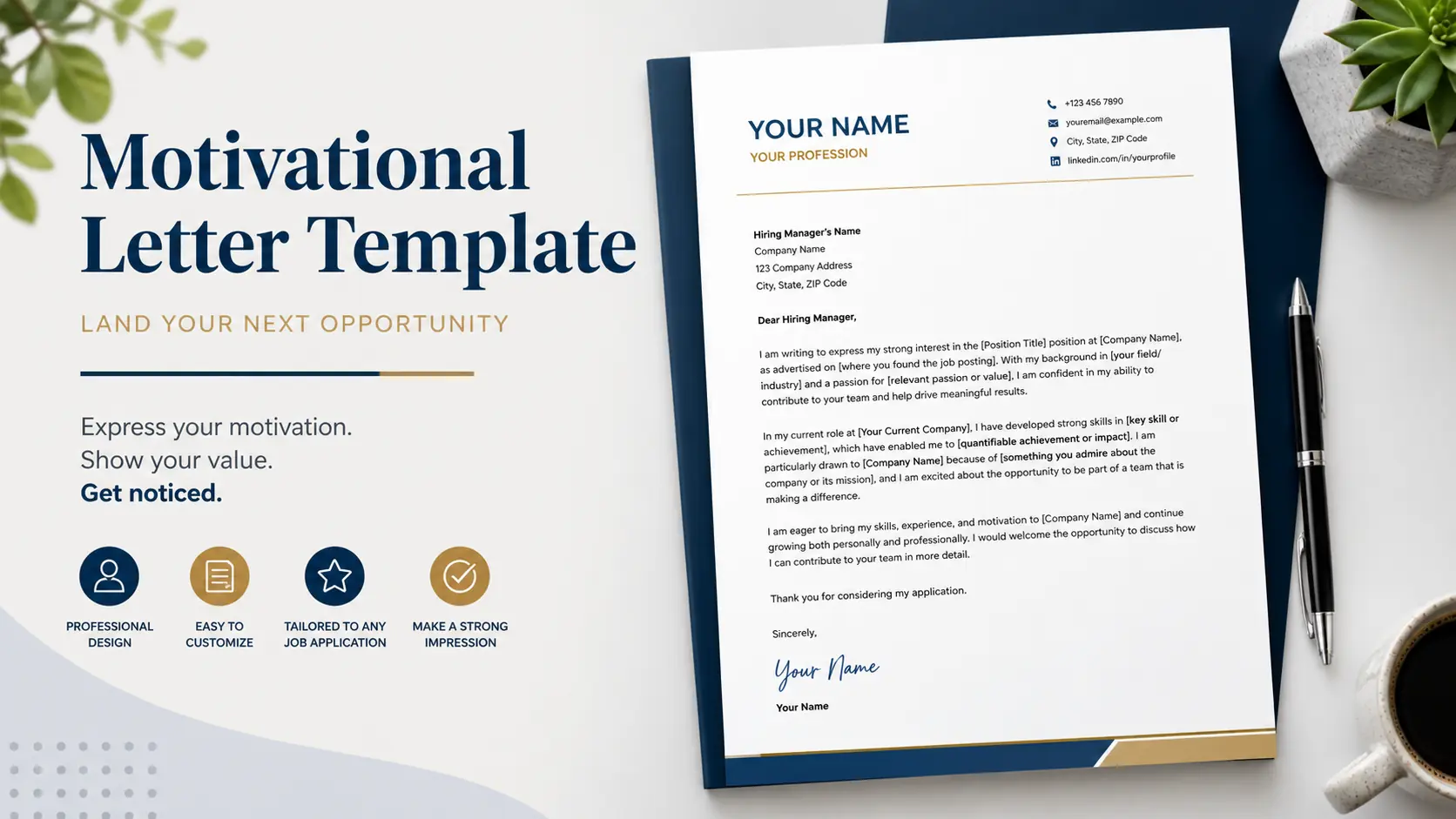
A motivational letter template for any job helps job seekers create a professional and structured letter quickly without starting from scratch. It usually includes an introduction, skills, experience, motivation, and a closing paragraph. Using a template with clear placeholders makes it easier to customise your letter for different job applications while applying through platforms like JobTree.
Table of Contents
- Why a Motivational Letter Matters
- Understanding the Structure
- Common Mistakes to Avoid
- How to Use This Template
- Motivational Letter Template (Copy & Fill)
- Final Advice for Job Seekers
- Frequently Asked Questions
Why a Motivational Letter Matters
A motivational letter template for any job is useful because many employers expect more than just a CV when reviewing applications. A motivational letter gives you the chance to explain why you are interested in the role and how your skills match the position. It helps you stand out in competitive job markets.
Many job seekers struggle to write motivational letters because they are unsure what to include or how to start. Without a clear structure, letters may sound unprofessional or incomplete. Using a structured template removes confusion and improves confidence.
A well-written motivational letter can also show communication skills, effort, and professionalism. Employers often notice candidates who take the time to explain their interest clearly. This can increase your chances of getting shortlisted.
The purpose of a motivational letter is not to repeat your CV but to explain your value in a more personal and detailed way. It allows you to connect your experience, skills, and goals to the company. This connection helps employers understand your motivation.
Using a template saves time and helps you apply consistently for multiple jobs without lowering quality. Instead of starting from scratch each time, you can customise key sections quickly. This improves both efficiency and effectiveness.
Understanding the Structure
A strong motivational letter usually follows a simple and clear structure that employers expect. The first paragraph introduces who you are and the position you are applying for. This should be clear, direct, and professional.
The second paragraph usually focuses on your skills, experience, or education. This is where you explain what you bring to the role and why you are suitable. Keep the information relevant to the job you are applying for.
The third paragraph explains your motivation and interest in the company or position. Employers want to know why you chose their organisation specifically. This shows effort and genuine interest.
The final paragraph should be a polite closing that thanks the employer and expresses your interest in an interview. A strong closing leaves a positive impression. Professional endings improve communication quality.
Keeping your letter clear, structured, and easy to read improves your chances of being noticed. Employers often review many applications quickly. A simple and effective structure helps your message stand out.
Common Mistakes to Avoid
One common mistake is writing a motivational letter that is too long or too complicated. Employers prefer clear and concise communication rather than unnecessary details. Keeping your message focused improves readability.
Another mistake is copying the exact same letter for every job application without changing important details. Generic letters often feel disconnected from the role. Customising your letter improves relevance and professionalism.
Some applicants also repeat their entire CV in the motivational letter. This reduces the purpose of the letter and makes it less useful. The letter should highlight key strengths instead of repeating everything.
Spelling and grammar mistakes can also damage your chances even if your content is good. Employers may assume the application was rushed or careless. Always review your letter before sending it.
Using informal language or being too casual can also create a negative impression. Professional tone and respectful communication are important during job applications. Keeping your writing formal improves credibility.
How to Use This Template
This motivational letter template for any job is designed to be simple and easy to use for different applications. You can copy the template and replace the bracket sections with your personal details. This makes the process faster and more efficient.
Always make sure you update the job title, company name, and skills for each application. These small changes help your letter feel personalised and relevant. Tailoring improves your chances of getting noticed.
You can also adjust the wording slightly to match your experience level. For example, if you have no experience, you can focus more on skills, motivation, and willingness to learn. The template works for both beginners and experienced applicants.
Before sending your application, read through the letter to ensure everything makes sense and matches the job advert. Small checks can prevent mistakes. Careful review improves professionalism.
Using this template regularly can help you apply for jobs faster while still maintaining quality. Consistency and improvement over time can lead to better results. Practice makes your applications stronger.
Motivational Letter Template (Copy & Fill)
Dear [Hiring Manager Name / Company Name],

My name is [Your Full Name], and I am writing to apply for the position of
[Job Title] at [Company Name]. I am very interested in this opportunity and
would like to be considered for the role, as I believe my skills, work ethic,
and willingness to learn make me a strong candidate for your team.

I have [mention your experience level – for example: X years of experience,
recently completed my studies, or strong personal interest in this field].
During this time, I have developed important skills such as [Skill 1],
[Skill 2], and [Skill 3], which I believe are relevant to this position.
I am a hardworking, reliable, and motivated individual who takes pride in
completing tasks efficiently and maintaining a professional attitude.

In addition to my skills, I am someone who is always willing to learn and
adapt to new environments. I am comfortable working both independently and
as part of a team, and I am committed to improving my abilities through
experience and continuous learning. I am confident that I can contribute
positively to your organisation and support your team in achieving its goals.

I am particularly interested in working for [Company Name] because
[insert reason – company reputation, growth opportunities, industry, etc].
I am eager to gain experience within your organisation while also contributing
my effort and dedication to the role.

I believe that my positive attitude, willingness to work hard, and ability
to learn quickly will allow me to perform well in this position. I am always
ready to take on new challenges and improve myself in a professional
environment.

Thank you for taking the time to consider my application. I would greatly
appreciate the opportunity to discuss my application further in an interview.
I am available at your convenience and can be contacted at [Phone Number]
or [Email Address].

Yours sincerely,
[Your Full Name]
A Strong Letter Can Improve Your Opportunities
A motivational letter template for any job is a powerful tool that can help job seekers apply more effectively and professionally. It allows you to present yourself clearly and explain your value beyond your CV. A well-written letter can improve your chances of getting noticed.
It is important to focus on clarity, relevance, and professionalism when using any template. Small improvements in your writing can create better impressions with employers. Practice and consistency will help you improve over time.
Even if you do not receive responses immediately, improving your applications is still a step forward. Many successful job seekers refine their approach before achieving results. Growth often happens gradually during job searching.
Using templates can save time while still allowing you to customise your applications properly. This balance helps you stay efficient without reducing quality. Smart application strategies improve your overall job search.
Keep applying, improving your letters, and staying consistent in your efforts. Opportunities often come with persistence and preparation. A strong motivational letter can open doors to better career opportunities.
Frequently Asked Questions
What is a motivational letter?
A motivational letter is a document that explains why you are applying for a job and why you are suitable for the position. It complements your CV by adding more personal and detailed information. Employers use it to understand your interest and motivation.
Can I use the same motivational letter for every job?
You can use a template, but you should always customise important details such as the company name, job title, and relevant skills. Tailoring your letter improves your chances of getting noticed. Generic letters are often ignored.
How long should a motivational letter be?
A motivational letter should usually be one page long with clear and concise paragraphs. It should include an introduction, skills section, motivation, and closing. Keeping it simple improves readability.
Do employers really read motivational letters?
Many employers do read motivational letters, especially when deciding between candidates with similar qualifications. A strong letter can help you stand out and show effort. It adds value to your overall application.
Browse more job application tips on JobTree.
Read this related guide: How to Fix a Weak Job Application.