
What Happens After You Submit a Job Application
Quick Answer
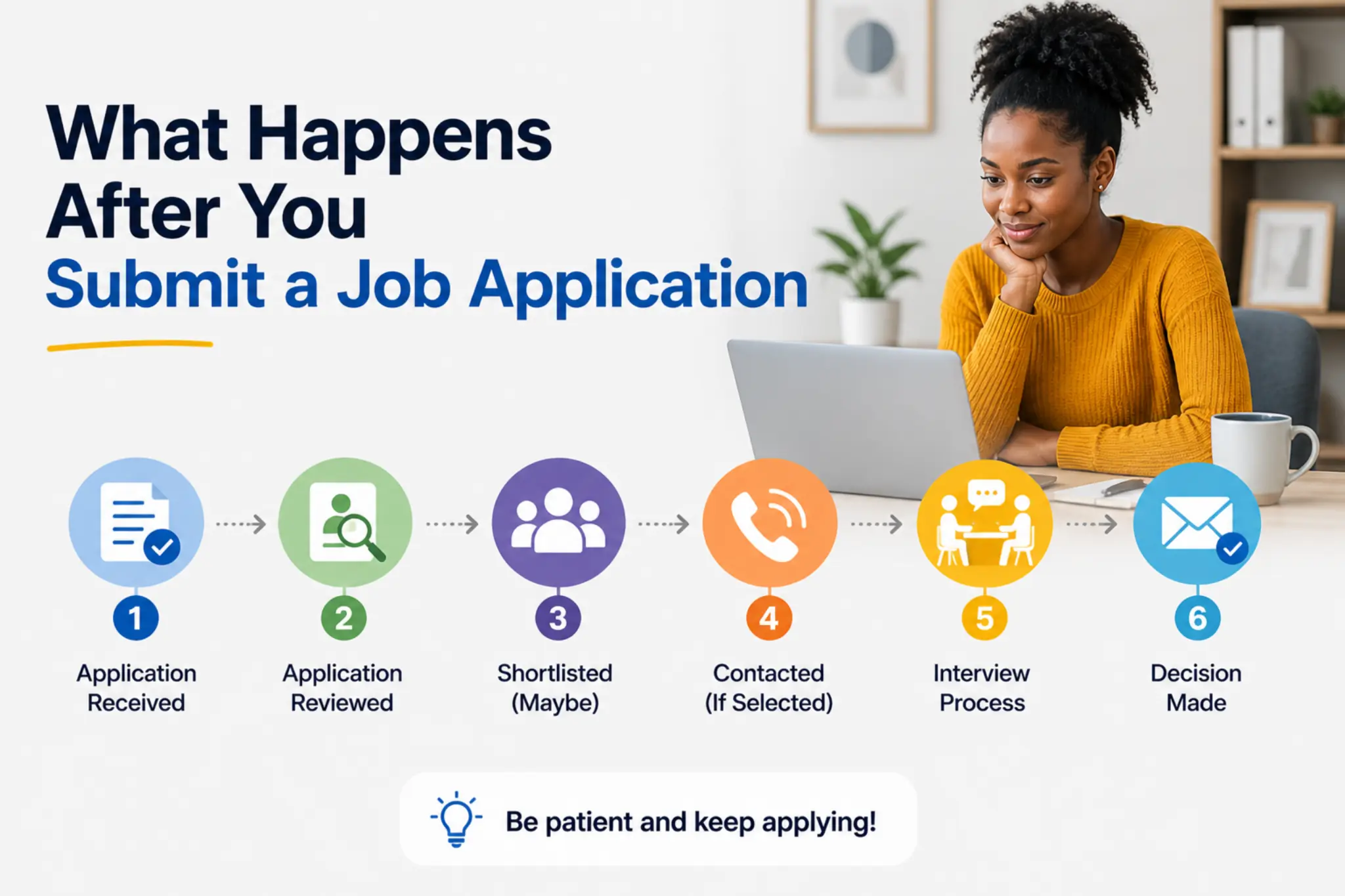
After you submit a job application, your CV usually goes through a review process where the employer checks whether your skills, experience, and details match the role. Some applications are screened by recruitment software first, while others are reviewed directly by a recruiter or hiring manager. The best thing you can do is keep applying, track your applications, prepare for possible interviews, and continue using trusted platforms like JobTree.
Table of Contents
- Your Application Is Received and Recorded
- Your CV Goes Through Screening
- Shortlisting and Interview Selection
- Why You May Wait Before Hearing Back
- How to Follow Up Professionally
- Smart Final Advice After Applying
- Frequently Asked Questions
Your Application Is Received and Recorded
What Happens After You Submit a Job Application is something many job seekers wonder about because the process can feel quiet from the outside. Once you click submit or send your CV by email, the employer usually receives your application in a system, inbox, or recruitment platform. This does not always mean someone reads it immediately, but it does mean your details have entered the hiring process.
In many companies, applications are collected until the closing date before serious reviewing begins. This is why you may not receive a response immediately after applying, even if you submitted everything correctly. Employers often wait to compare all applicants fairly before deciding who should move forward.
If you applied through a job website, you may receive an automatic confirmation message. This message simply confirms that the application was received, not that you have been shortlisted. It is helpful to save these confirmations because they can help you track where and when you applied.
When you apply by email, the employer may not send an automatic reply. Your message may sit in an inbox with many other applications until the recruiter starts sorting them. This is why your email subject line, CV file name, and message should be clear and professional.
The first stage of the job application process is mostly about collection and organisation. The employer needs to gather applications, separate complete submissions from incomplete ones, and prepare for screening. At this point, your goal is to make sure your application is easy to find, easy to read, and relevant to the job.
Your CV Goes Through Screening
After the employer receives your application, your CV usually goes through a screening stage. This is where the recruiter checks whether your education, experience, skills, location, and availability match the requirements. If your CV does not clearly show the right information, it may be skipped even if you are capable of doing the work.
Some employers use recruitment software to help sort applications before a person reads them. This software may look for keywords linked to the job title, required skills, qualifications, or experience level. This is why it helps to tailor your CV to the role instead of sending the same version for every application.
For example, if the advert asks for customer service experience, computer skills, or admin support, those words should appear naturally in your CV if they apply to you. Recruiters often scan quickly because they may have hundreds of applications to review. A CV that is clear and relevant gives them a reason to continue reading.
The seed keyword job application timeline is useful because this screening stage can take longer than many job seekers expect. Some employers screen within a few days, while others may take weeks depending on the number of applicants. The timeline also depends on whether the role is urgent or part of a slower hiring plan.
During screening, employers may also remove applications that are incomplete or do not follow instructions. If the advert asked for a CV, cover letter, reference number, or specific subject line, missing details can hurt your chances. Always read the job post carefully before applying so your application passes the basic checks.
Shortlisting and Interview Selection
What Happens After You Submit a Job Application becomes more important once the employer begins shortlisting. Shortlisting means the recruiter chooses the candidates who seem to match the role best. These candidates may be invited for interviews, assessments, phone calls, or further checks.
Being shortlisted does not always mean you have the job, but it is a positive step. It means your application stood out enough for the employer to consider you further. At this stage, they may compare your CV with other strong candidates to decide who should be contacted first.
Some companies create a longlist before creating a final shortlist. A longlist may include applicants who meet the basic requirements, while the shortlist includes the strongest candidates. This can add more time to the process, especially when many people apply for the same position.
Employers may also check whether your experience matches the exact duties of the role. For example, if a job involves data capturing, sales, customer support, driving, cleaning, retail work, or administration, they may look for proof that you can handle those tasks. The clearer your CV is, the easier it is for them to see your match.
If you are selected for the next stage, you may receive a call, email, SMS, or WhatsApp message depending on the employer. This is why your contact details must be correct and active. You should check your phone and email regularly after applying so you do not miss an opportunity.
Why You May Wait Before Hearing Back
Many job seekers worry when they do not hear back quickly after applying. The seed keyword how long does it take to hear back from a job application is common because waiting can feel stressful. In reality, response times vary depending on the employer, industry, closing date, and number of applications.
Some employers respond within a few days if the role is urgent. Others may take two to four weeks or longer, especially when applications must be reviewed by HR, supervisors, and managers. A slow response does not always mean your application was ignored.
Delays can happen because the employer is still collecting applications. They may also be waiting for approval, budget confirmation, internal candidates, or manager availability. These delays are part of the hiring process and are not always visible to job seekers.
Another reason you may not hear back is that only shortlisted candidates are contacted. Many companies do not have enough time to reply to every applicant individually. This can be frustrating, but it is common when a vacancy attracts many applications.
While waiting, avoid putting your whole job search on hold for one application. Continue applying for other suitable roles, improving your CV, and preparing for interviews. This keeps your momentum strong and reduces the pressure of waiting for one employer to reply.
How to Follow Up Professionally
Following up can be helpful if done politely and at the right time. If the job post included a closing date, it is usually better to wait a few days after that date before following up. If there was no closing date, waiting about one to two weeks is reasonable.
Your follow-up message should be short, respectful, and clear. You can mention the job title, the date you applied, and that you would like to know whether there are any updates on the application. Avoid sounding angry, desperate, or demanding because professionalism matters.
A good follow-up email can remind the employer of your application without putting pressure on them. It also shows that you are interested and organised. However, sending repeated messages every day can create a negative impression.
If you applied through an online portal, check whether the system shows your application status. It may say submitted, under review, shortlisted, unsuccessful, or closed. These updates can help you understand where you are in the process without needing to contact the employer directly.
When following up by phone, prepare what you want to say before calling. Speak politely, ask whether the vacancy is still in progress, and thank the person for their time. Even if you do not get a clear answer, a professional attitude can leave a good impression.
Stay Ready While Your Application Is Being Reviewed
What Happens After You Submit a Job Application is not fully under your control, but your next steps are. Once your application is sent, you should prepare as if you might be contacted for an interview. This means reviewing the job description, researching the company, and practising answers to common questions.
You should also keep a record of every application you submit. Write down the company name, role, date applied, website, contact details, and any follow-up action. This prevents confusion if an employer calls you weeks later about a role you forgot.
It is also useful to review your CV regularly while waiting for responses. If you are applying often and getting no replies, your CV may need improvement. Small changes in layout, keywords, work history, and skills can improve your results.
Do not take silence personally because hiring processes can be slow and competitive. Many strong applicants do not receive responses simply because the employer has too many candidates. Instead of feeling discouraged, focus on improving your next application.
The best job seekers stay active, organised, and prepared after applying. They do not wait helplessly for one employer to decide their future. They keep searching, keep learning, and keep improving until the right opportunity comes.
Frequently Asked Questions
What happens after I submit a job application?
After you submit a job application, the employer usually receives your CV through an inbox, website, or recruitment system. Your application may then be checked for basic requirements, screened for relevant skills, and compared with other candidates. If you match the role well, you may be shortlisted for an interview or further assessment.
How long does it take to hear back from a job application?
The time can vary from a few days to several weeks depending on the employer and the number of applicants. Some companies wait until the closing date before reviewing applications, while others begin screening immediately. If you do not hear back quickly, continue applying for other roles while waiting.
What does application under review mean?
Application under review usually means the employer has received your application and is checking whether you meet the requirements. It does not mean you have been rejected, but it also does not guarantee that you will be shortlisted. The employer may still be comparing your CV with other applicants.
Should I follow up after submitting a job application?
Yes, you can follow up if enough time has passed and the employer provided contact details. A polite follow-up after the closing date or after one to two weeks can show interest without being pushy. Keep your message short, professional, and focused on asking whether there are any updates.
Browse more job search advice on JobTree.
Read this related guide: How to Create a Professional Email for Job Applications.