
How to Stay Motivated While Looking for a Job
Quick Answer
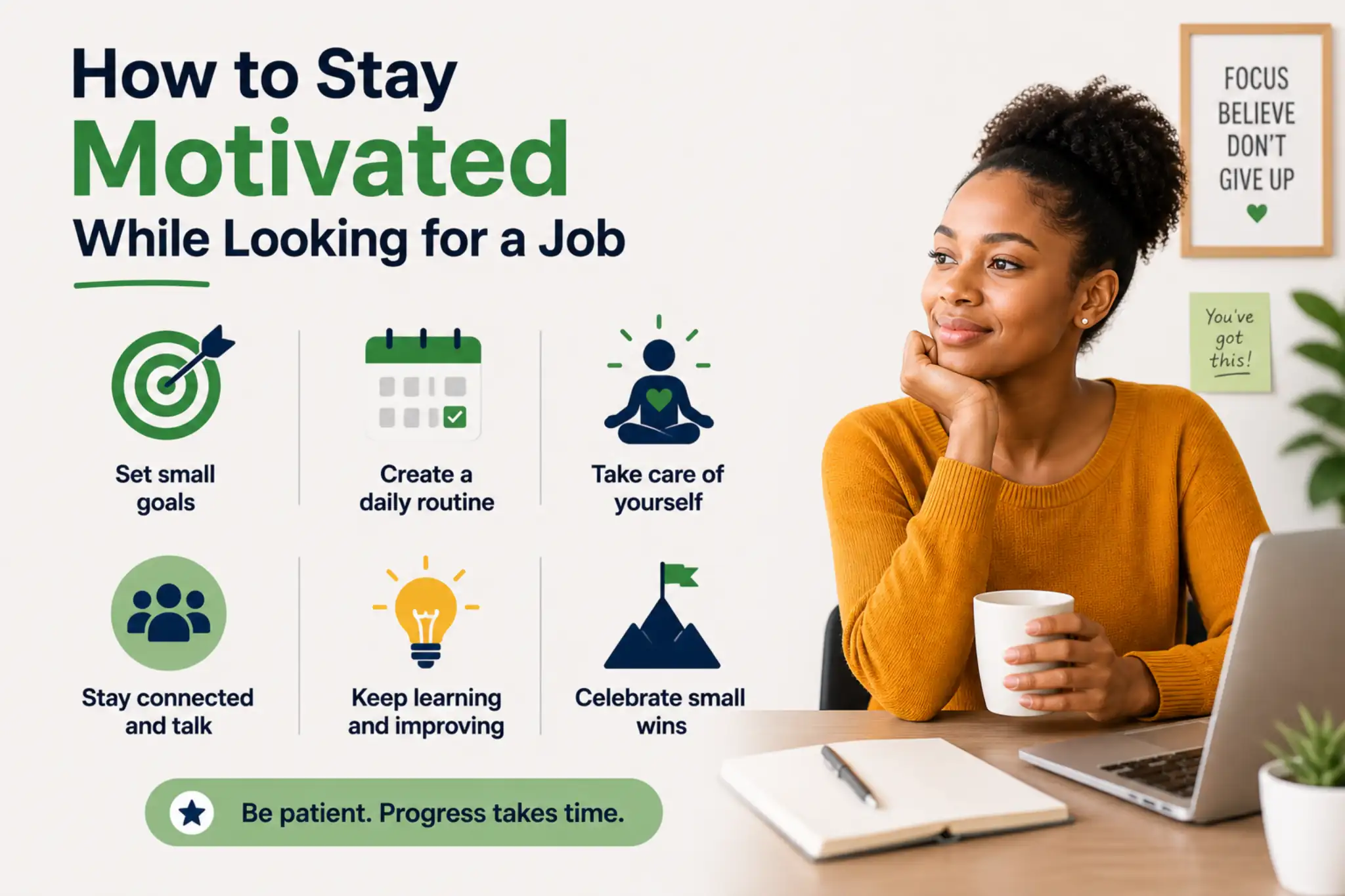
Learning how to stay motivated while looking for a job is important because job searching can become emotionally and mentally exhausting over time. Staying motivated usually involves creating a routine, applying consistently, improving your skills, taking breaks when needed, and focusing on progress instead of only results. The best approach is to combine healthy habits with structured job searching on trusted platforms like JobTree.
Table of Contents
- Why Job Searching Can Feel Difficult
- Why a Daily Routine Matters
- How to Deal With Job Rejection
- How to Stay Productive While Unemployed
- Protecting Your Mental and Emotional Health
- Final Advice for Staying Motivated
- Frequently Asked Questions
Why Job Searching Can Feel Difficult
How to Stay Motivated While Looking for a Job is important because job searching often takes longer than many people expect. Applying repeatedly without getting responses can make even confident people feel discouraged and frustrated. Over time, the emotional pressure of waiting and uncertainty can affect motivation.
Many job seekers compare themselves to other people online or in their communities. Seeing others announce promotions, interviews, or new jobs can sometimes create feelings of failure or self-doubt. It is important to remember that every person’s situation, timing, and opportunities are different.
The seed keyword stay motivated during job search matters because motivation naturally changes over time. Some days you may feel hopeful and productive, while other days may feel slow and disappointing. This emotional movement is normal during a long job search process.
Financial pressure can also make job searching more stressful because unemployment affects many parts of daily life. Transport costs, mobile data, food, family responsibilities, and personal goals can all create additional pressure while you search for work. This pressure can make rejection feel even more personal.
Another challenge is that many employers do not respond to every application. Waiting without feedback can make it difficult to know whether your applications are working or not. Understanding that silence is common in recruitment can help reduce unnecessary self-blame.
Why a Daily Routine Matters
One of the best ways to stay motivated is by creating a daily routine while searching for work. Without structure, it becomes easier to lose focus, sleep irregularly, procrastinate, or feel emotionally drained. A simple routine can help you stay disciplined and productive even during unemployment.
Your routine does not need to feel strict or overwhelming to be effective. You can choose a realistic time each day for searching jobs, updating your CV, improving skills, and checking emails. Consistency matters more than spending every hour applying for vacancies.
A daily plan can also help separate job searching from personal time. If you search all day without breaks, the process may become emotionally exhausting very quickly. Giving yourself time to rest, exercise, relax, or spend time with family helps protect your energy.
It is also helpful to set small daily or weekly goals instead of focusing only on getting hired immediately. For example, you might aim to apply for five quality jobs, improve your CV, complete a short course, or practise interview questions. Achievable goals create a sense of progress.
Many people underestimate how important routine is for confidence and mental focus. A structured day can reduce feelings of hopelessness because it gives you a sense of direction and control. Staying active and organised can improve motivation even before you receive interview invitations.
How to Deal With Job Rejection
The seed keyword how to deal with job rejection is important because rejection is one of the hardest parts of searching for work. Even strong candidates experience rejection because hiring decisions depend on many factors beyond skill alone. One rejection does not mean you are incapable or unqualified for every future role.
Some employers reject applicants because another person had more experience, a referral, or a skill that matched the role more closely. Other times, companies may change budgets, delay hiring, or hire internally before interviews are completed. These decisions are not always personal even when they feel disappointing.
It is important to avoid building your confidence around one specific application. Many job seekers become emotionally attached to one opportunity and feel devastated when it does not work out. A healthier approach is to keep multiple opportunities open at the same time.
You can also use rejection as a chance to improve your strategy instead of only seeing it as failure. Review your CV, interview preparation, communication style, or application methods to identify areas that may need improvement. Small changes can strengthen future applications.
Another important habit is learning how to recover emotionally after disappointment. Taking a short break, talking to supportive people, or focusing on productive activities can help you reset mentally. Staying stuck in frustration for too long can weaken your confidence and motivation.
How to Stay Productive While Unemployed
Staying productive while unemployed can help you maintain confidence and continue growing during your job search. Productivity does not only mean applying for jobs every day without rest. It also includes improving your skills, learning new things, and building habits that support your future goals.
Short online courses can help strengthen your CV while you search for work. Learning Microsoft Office, customer service, communication, digital skills, or administration can improve your confidence and make your applications stronger. Free learning platforms make it easier to keep developing even without income.
You can also use your time to improve practical job search skills such as CV writing, interview preparation, and professional communication. Many applicants lose opportunities because of avoidable mistakes in these areas. Practising regularly helps you feel more prepared when interviews finally come.
Another useful habit is networking with people who may know about opportunities in your area. Friends, family members, community groups, and previous colleagues can sometimes help you hear about vacancies before they are widely advertised. Building connections can improve your chances of finding work.
Productivity should also include taking care of your physical health because energy affects motivation. Exercise, sleep, hydration, and regular meals can improve focus and emotional stability during stressful periods. Small healthy habits can make a bigger difference than many people realise.
Protecting Your Mental and Emotional Health
Looking for work for a long time can affect confidence, stress levels, and emotional wellbeing if you do not protect your mental health carefully. Constant rejection or silence can make job seekers question themselves unfairly. This is why emotional support and self-care matter during unemployment.
One important step is avoiding the habit of comparing your progress to other people constantly. Social media often shows only success stories without showing the struggles behind them. Comparing yourself unfairly can reduce motivation and increase feelings of pressure.
Talking to supportive people can help reduce emotional stress during difficult periods. Friends, family members, mentors, or community groups may encourage you, help you stay focused, or remind you of your strengths. Isolation often makes discouragement feel worse.
It is also important to recognise when you need a break from job searching for a short time. Spending every waking hour searching without rest can increase stress and burnout. A short mental reset can sometimes improve focus and energy more effectively than forcing yourself to continue endlessly.
Confidence grows when you focus on progress instead of only outcomes. Every application, interview, skill improvement, and professional interaction helps build experience for future opportunities. Staying mentally strong during uncertainty is part of long-term success.
Keep Moving Forward Even When Progress Feels Slow
How to Stay Motivated While Looking for a Job is ultimately about learning how to continue moving forward during uncertainty. Motivation is not something people feel perfectly every day, especially during unemployment. The goal is to stay consistent even on difficult days.
Some opportunities may take weeks or months to arrive, but that does not mean your efforts are wasted. Every application teaches you something about the market, your CV, or your approach. Small improvements made consistently can create better results over time.
It is important to celebrate small wins while searching for work instead of waiting only for the final job offer. Updating your CV, completing a course, getting an interview, or improving your confidence are all signs of progress. Recognising these steps helps protect motivation.
You should also remember that unemployment does not define your value as a person. Many talented and hardworking people experience periods of unemployment due to economic conditions, competition, or timing. Your current situation is not your permanent future.
The most successful job seekers are often the ones who stay consistent, adaptable, and emotionally resilient during difficult periods. Keep applying carefully, improving your skills, and protecting your mental health while searching. Over time, persistence and preparation create new opportunities.
Frequently Asked Questions
How can I stay motivated during a long job search?
You can stay motivated by creating a daily routine, setting realistic goals, improving your skills, and applying consistently without overwhelming yourself. Taking breaks, exercising, and focusing on progress instead of only results can also help. Motivation becomes easier to maintain when your job search has structure and balance.
How do I deal with job rejection emotionally?
Job rejection can feel personal, but many hiring decisions depend on factors beyond your control. Instead of viewing rejection as proof that you are not capable, use it as an opportunity to improve your CV, applications, or interview preparation. Talking to supportive people and continuing to apply can help you recover emotionally.
What should I do while unemployed?
While unemployed, you can focus on improving your skills, updating your CV, networking, searching for jobs consistently, and building healthy routines. Short online courses, volunteer work, and interview practice can also help strengthen your future applications. Staying productive improves confidence and readiness for opportunities.
Why do job searches affect mental health?
Job searching can affect mental health because uncertainty, rejection, financial pressure, and lack of responses create emotional stress over time. Long periods without progress may reduce confidence and motivation if not managed carefully. Protecting your mental health through routine, support, rest, and healthy habits is important during unemployment.
Browse more career advice on JobTree.
Read this related guide: How to Stand Out When Hundreds Apply for the Same Job.