
How Rejection Affects Job Seekers in South Africa
Quick Answer
How rejection affects job seekers in South Africa is a serious issue because repeated rejection can damage confidence, increase stress, and make job searching emotionally exhausting over time. Many unemployed people experience frustration, self-doubt, anxiety, and hopelessness when applications receive no response or repeated rejection. The best approach is to protect your mental health, stay productive, improve your applications gradually, and continue searching through trusted platforms like JobTree.
Table of Contents
- The Emotional Impact of Job Rejection
- How Rejection Affects Confidence
- Why No Responses Feel So Frustrating
- Mental Health and Long-Term Unemployment
- How to Recover and Keep Moving Forward
- Final Advice for Job Seekers
- Frequently Asked Questions
The Emotional Impact of Job Rejection
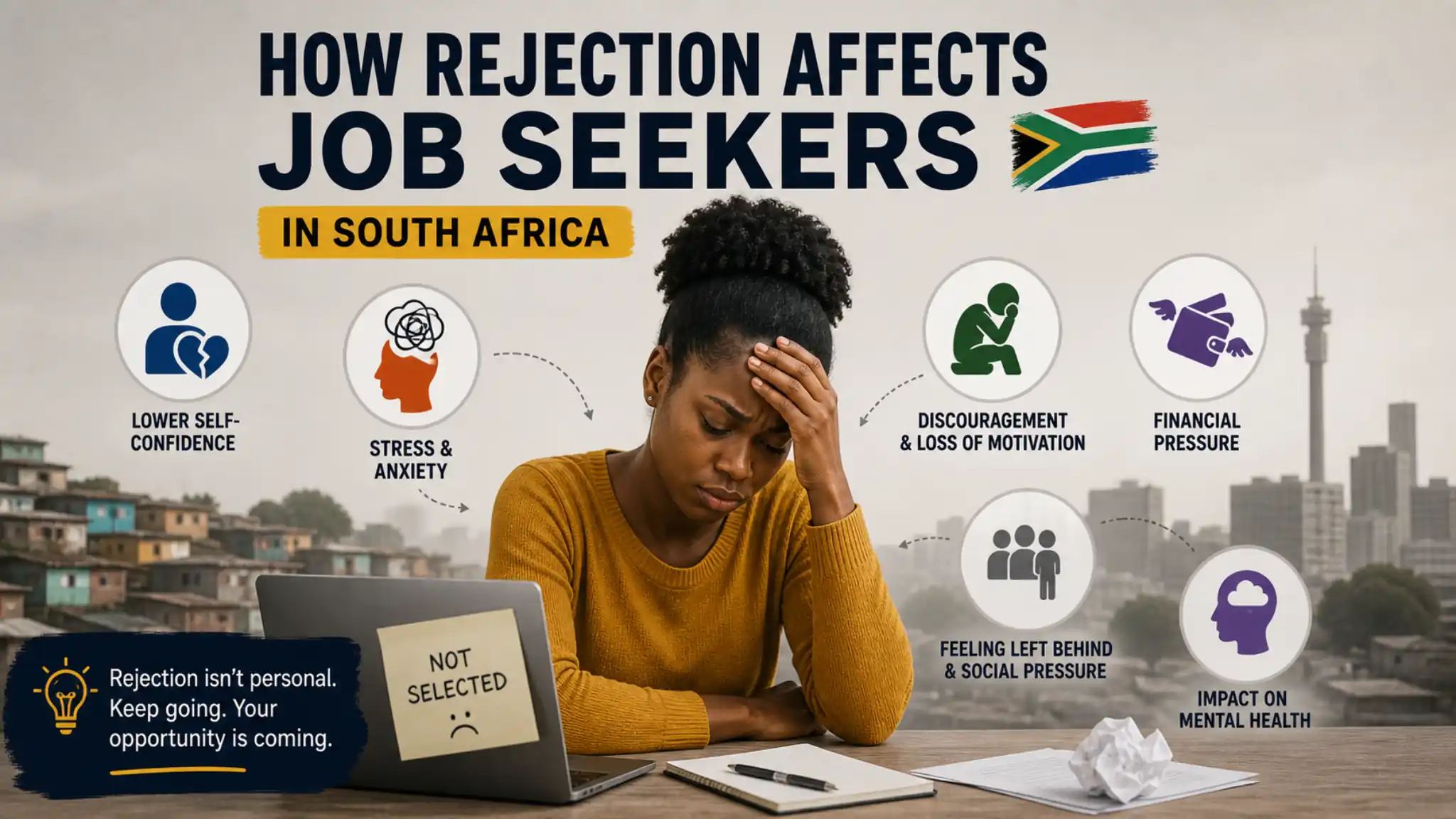
How Rejection Affects Job Seekers in South Africa is an important topic because many people experience repeated disappointment while trying to find work. Applying for jobs takes time, effort, emotional energy, and hope, especially when opportunities are limited. When applications are rejected or ignored repeatedly, many job seekers begin to feel emotionally exhausted.
Job rejection often affects more than just employment opportunities because it can also affect self-esteem and daily motivation. Many people begin to question their abilities, education, appearance, experience, or future prospects after multiple unsuccessful applications. Over time, this emotional pressure can become difficult to manage without support.
The emotional impact becomes even stronger when financial pressure is involved. Job seekers may worry about transport, food, rent, family responsibilities, and long-term stability while waiting for opportunities. The combination of rejection and financial stress can make unemployment feel overwhelming.
Many people also feel embarrassed discussing unemployment with friends, family, or their communities. Seeing other people succeed while struggling personally can increase feelings of shame or isolation. Social pressure can make rejection feel more personal than it actually is.
The seed keyword how to deal with job rejection matters because rejection is not always a reflection of a person’s value or potential. Employers make decisions based on budgets, timing, experience levels, internal hiring, and many other factors. Understanding this can help reduce unnecessary self-blame.
How Rejection Affects Confidence
Confidence often changes slowly after repeated rejection because many job seekers begin doubting themselves over time. At the beginning of a job search, people usually apply with hope and motivation. After months of silence or rejection, confidence can start weakening gradually.
Some people stop applying for certain roles because they believe they are not good enough anymore. Others become afraid of interviews because they expect rejection before the process even begins. This fear can reduce performance and make future applications harder emotionally.
Confidence can also be affected when employers reject applicants without giving feedback. Without understanding why an application failed, people may assume the worst about themselves. This uncertainty often creates frustration and overthinking.
Another problem is that many job seekers compare themselves unfairly to others. Seeing classmates, friends, or people online getting hired may create the feeling that everyone else is progressing except them. These comparisons can increase self-doubt even when the situations are completely different.
It is important to remember that confidence is influenced by environment and circumstances, not only personality. A difficult job market can affect even skilled and hardworking people. Rejection should not be used as proof that you have no value or future opportunities.
Why No Responses Feel So Frustrating
One of the hardest parts of job searching is not always rejection itself, but silence from employers. Many job seekers spend hours applying for opportunities and never receive any response at all. This lack of communication can make people feel invisible and discouraged.
Silence creates uncertainty because applicants do not know whether their CV was reviewed, rejected, or ignored completely. Waiting without answers often increases stress because people continue checking emails and phones while hoping for updates. This emotional waiting can become exhausting over time.
Some employers receive hundreds or thousands of applications and cannot respond to everyone individually. While this explains the silence, it does not remove the emotional effect on applicants. Repeated silence can slowly weaken motivation and confidence.
The seed keyword staying motivated after rejection is important because many people lose momentum after too many unanswered applications. They may begin delaying applications, avoiding job platforms, or giving up on opportunities they once believed in. This emotional burnout is common during long job searches.
It is important for job seekers to understand that silence does not always mean failure. Some applications remain under review for weeks, while others are delayed by internal company decisions. Continuing to apply while waiting for responses can help reduce emotional dependence on one specific application.
Mental Health and Long-Term Unemployment
Long-term unemployment can affect mental health in many ways if stress continues without support or relief. Constant rejection, financial pressure, and uncertainty can increase anxiety and emotional exhaustion. Some job seekers may begin feeling hopeless after long periods without progress.
Unemployment can also affect daily routines and energy levels. Without structure, people may sleep irregularly, lose motivation, avoid social situations, or stop taking care of themselves properly. These changes can slowly affect emotional wellbeing over time.
Another challenge is feeling disconnected from purpose or progress while unemployed. Many people connect work with independence, achievement, identity, or stability. When job searching lasts too long, some begin feeling stuck or left behind compared to others around them.
Support systems become extremely important during difficult periods of unemployment. Friends, family members, community groups, mentors, or support networks can help reduce isolation and emotional stress. Talking openly about struggles can make the pressure feel more manageable.
Protecting mental health while job searching is just as important as improving your CV or applying for vacancies. Rest, exercise, healthy routines, positive support, and balanced thinking all help strengthen emotional resilience. Staying mentally strong helps people continue moving forward even during difficult periods.
How to Recover and Keep Moving Forward
Recovering from rejection starts with understanding that setbacks are part of the job search process for many people. Even strong candidates are rejected because of competition, timing, company decisions, or changing requirements. Rejection does not erase your skills, effort, or future potential.
One helpful strategy is focusing on progress instead of only outcomes. Updating your CV, improving interview skills, completing short courses, networking, or applying consistently are all signs of movement. Small improvements build confidence slowly over time.
Creating structure during unemployment can also help emotional recovery. A daily routine gives your day purpose and reduces the feeling of drifting without direction. Consistency can improve focus even when motivation changes from day to day.
It is also important to take breaks when emotional exhaustion becomes too strong. Spending every hour searching jobs without rest can increase stress and burnout. A short break to rest mentally can improve your energy and motivation later.
Many successful people experienced long periods of rejection before finding the right opportunity. The key difference is often persistence, adaptability, and emotional resilience. Continuing carefully and consistently gives you more chances to eventually succeed.
Your Situation Today Is Not Your Permanent Future
How Rejection Affects Job Seekers in South Africa is a real issue because unemployment affects both emotional wellbeing and daily life. Repeated rejection can make people feel discouraged, isolated, and emotionally tired. These feelings are understandable during a difficult job search.
However, rejection should never become the final definition of your future or self-worth. Many talented people experience unemployment due to economic conditions, competition, limited vacancies, or timing. A difficult season does not mean permanent failure.
The most important thing is protecting your confidence while continuing to improve gradually. Every application, interview, skill improvement, and professional interaction helps build experience for future opportunities. Growth often happens slowly during difficult periods.
Support, routine, healthy habits, and realistic thinking all help job seekers stay emotionally stronger while searching for work. You do not need to feel motivated every single day to continue moving forward. Consistency matters more than perfect confidence.
Keep applying carefully, improving your strategy, and reminding yourself that setbacks are part of many career journeys. Opportunities can appear unexpectedly after long periods of waiting. Persistence and emotional resilience often matter more than people realise.
Frequently Asked Questions
How does job rejection affect people emotionally?
Job rejection can affect confidence, motivation, stress levels, and emotional wellbeing over time. Repeated rejection or silence from employers may cause frustration, self-doubt, and emotional exhaustion. Many job seekers also feel pressure because unemployment affects financial stability and future plans.
How can I deal with job rejection better?
You can deal with job rejection by understanding that many hiring decisions depend on competition, timing, and employer needs rather than personal failure alone. Focusing on improving your CV, skills, and interview preparation can help you recover emotionally. Support from trusted people and healthy routines can also reduce stress.
Why do employers not respond to applications?
Many employers receive very large numbers of applications and may not have enough time to respond individually to every applicant. Some applications are delayed because of internal reviews, shortlisting processes, or hiring changes. Silence can feel frustrating, but it does not always mean your application was ignored immediately.
How can job seekers stay motivated after rejection?
Job seekers can stay motivated after rejection by creating routines, focusing on progress, improving their skills, and continuing to apply consistently. Taking care of mental health through rest, exercise, support, and balanced thinking is also important. Persistence and emotional resilience help people continue searching even during difficult periods.
Browse more career advice on JobTree.
Read this related guide: How to Stay Motivated While Looking for a Job.