
Why You’re Not Getting Responses After Applying for Jobs
Quick Answer
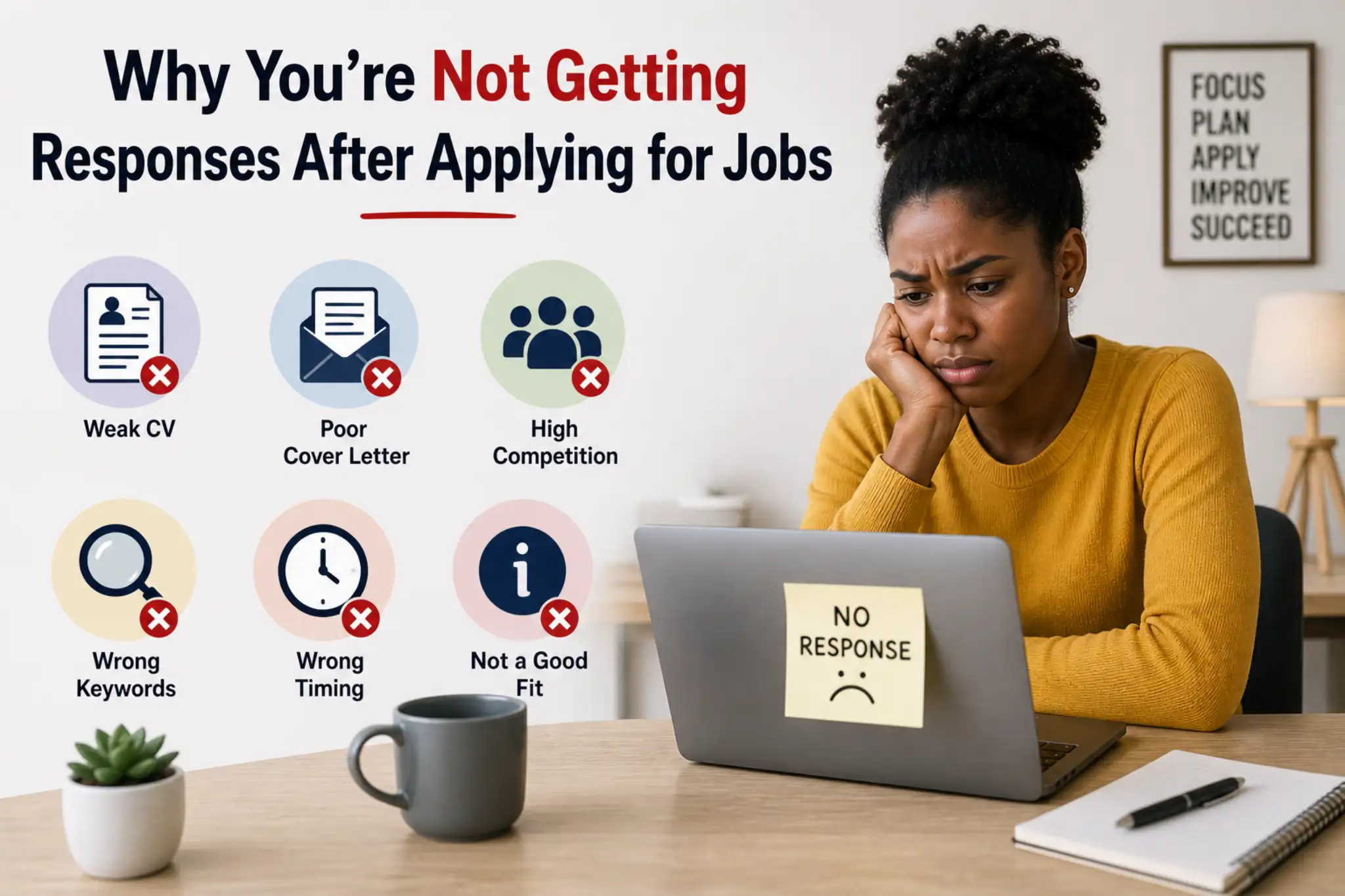
Why You’re Not Getting Responses After Applying for Jobs? Many job seekers are not getting responses after applying for jobs because of high competition, weak CVs, untailored applications, poor communication, or applying for unsuitable roles. Employers often receive hundreds of applications and quickly shortlist only the most relevant candidates. Improving your CV, applying strategically, and using trusted platforms like JobTree can help increase your chances of getting noticed.
Table of Contents
- High Competition in the Job Market
- Why Your CV May Be Getting Ignored
- Common Job Application Mistakes
- Why Tailoring Applications Matters
- How Communication Affects Responses
- Final Advice for Improving Responses
- Frequently Asked Questions
High Competition in the Job Market
Why You’re Not Getting Responses After Applying for Jobs is a question many job seekers ask because online applications have become extremely competitive. Employers often receive hundreds or even thousands of applications for one vacancy, especially in popular industries and entry-level roles. This means recruiters usually shortlist only a small percentage of applicants.
Online job platforms have made it easier for people to apply quickly using phones, email, and digital CVs. While this creates more opportunities, it also increases the number of applications employers receive daily. Recruiters often review applications under pressure and within limited time.
Some employers spend only a few seconds scanning each CV during the first review stage. This means your application needs to make a strong first impression very quickly. A confusing or generic CV may be ignored before being read fully.
Another challenge is that many applicants apply for jobs they do not fully qualify for. Recruiters must sort through many irrelevant applications before finding suitable candidates. This makes it even more important for your application to match the role clearly.
The job market in South Africa can also be difficult because unemployment and competition remain high. Many skilled and hardworking people apply for the same opportunities at the same time. Understanding this reality can help job seekers avoid taking silence too personally.
Why Your CV May Be Getting Ignored
The seed keyword why my CV gets ignored is important because CV quality is one of the biggest reasons employers do not respond to applications. A CV should clearly show your experience, skills, education, and suitability for the role within the first few seconds. If recruiters struggle to understand your value quickly, they may move on to another applicant.
One common problem is poor formatting or organisation. Long paragraphs, cluttered layouts, inconsistent fonts, and missing headings can make your CV difficult to read. A clean and structured layout improves readability and professionalism immediately.
Another issue is including too much irrelevant information that does not match the role. Employers want to see skills and experience connected to the vacancy they advertised. Unnecessary details can distract from the information that actually matters.
Spelling and grammar mistakes can also damage first impressions even when applicants have useful skills. Errors may make employers assume the application was rushed or careless. Carefully reviewing your CV before sending it can improve professionalism significantly.
Some CVs are also too generic because applicants send the exact same document to every employer. Recruiters often notice when a CV feels untargeted or unrelated to the role. Tailoring your CV slightly for different positions can improve your chances of getting responses.
Common Job Application Mistakes
Many job seekers unknowingly make mistakes during the application process that reduce their chances of getting responses. One major mistake is not reading the vacancy carefully before applying. Employers often include specific instructions that applicants are expected to follow.
For example, some vacancies require reference numbers, specific subject lines, supporting documents, or application forms. Missing these details may result in your application being rejected before anyone reviews your CV properly. Attention to detail matters during recruitment.
Another common mistake is applying for roles that do not match your experience or qualifications at all. While it is good to stay hopeful, applying randomly for unsuitable jobs can waste time and reduce motivation. Strategic applications usually perform better than mass applications.
Some applicants also send unprofessional emails or incomplete documents. A professional email should include a greeting, clear message, attached CV, and correct contact details. Small communication mistakes can affect how recruiters view your professionalism.
Applying too late can also reduce your chances because some employers begin shortlisting before the closing date. Strong candidates who apply earlier may receive attention before the application process officially closes. Applying sooner can sometimes improve visibility.
Why Tailoring Applications Matters
Tailoring your applications is one of the most effective ways to improve your chances of getting responses from employers. Recruiters want to see clear evidence that your skills and experience match the specific role. Generic applications often fail because they do not show enough relevance.
Tailoring does not mean rewriting your entire CV every time you apply for a job. It simply means adjusting important details to highlight the experience and skills most relevant to the vacancy. Small adjustments can make a major difference during shortlisting.
The seed keyword how to increase interview chances is strongly connected to tailoring because recruiters often search for keywords related to the job description. If your application reflects the language and requirements used in the advert naturally, it becomes easier for recruiters to see your suitability.
Tailored applications also show effort and professionalism. Employers often notice when candidates clearly understand the role and explain why they are suitable. This can help your application stand out in a competitive job market.
Another advantage of tailoring is that it may help your application pass recruitment software systems. Some companies use systems that scan CVs for keywords before human recruiters review them. Matching important job-related terms can improve visibility.
How Communication Affects Responses
Communication plays an important role in how employers view applicants throughout the recruitment process. Professional communication starts with your email address, subject line, message, and response style. Small details often influence first impressions more than job seekers realise.
Some applicants use unprofessional email addresses or send blank emails with only attachments included. Employers may view this as careless or unprepared communication. A professional email message creates a stronger first impression immediately.
It is also important to answer calls, emails, or messages professionally when recruiters contact you. Delayed responses, rude communication, or unclear answers may reduce employer confidence. Communication should remain respectful and organised throughout the process.
Following up professionally can also help in some situations if enough time has passed after applying. A short and respectful follow up message may remind recruiters about your application. However, repeated or aggressive follow ups can create a negative impression.
Another communication issue is failing to keep contact details updated. If your phone number, email address, or voicemail is incorrect, recruiters may not be able to reach you even if they are interested. Checking your details regularly helps prevent missed opportunities.
Improving Responses Takes Strategy and Patience
Why You’re Not Getting Responses After Applying for Jobs is often connected to multiple factors rather than one single problem. Competition, CV quality, communication, timing, and application strategy all influence whether employers respond. Improving these areas gradually can increase your chances over time.
It is important not to assume that silence always means you are unqualified or incapable. Many employers receive large numbers of applications and may not respond to every candidate individually. Rejection or silence is common even for strong applicants.
The best approach is focusing on quality applications instead of only quantity. Applying carefully for suitable roles usually works better than sending hundreds of untailored CVs quickly. A targeted strategy helps employers see your relevance more clearly.
You should also continue improving your skills while searching for opportunities. Short courses, practical experience, communication skills, and updated CVs all strengthen your professional profile. Small improvements build stronger applications over time.
Persistence, consistency, and professional habits remain important during difficult job searches. Every application teaches something about the market, your strategy, or your presentation. Staying patient and adaptable improves your chances of eventually receiving better opportunities.
Frequently Asked Questions
Why am I not getting responses after applying for jobs?
Many job seekers do not receive responses because of high competition, untailored CVs, weak applications, or applying for unsuitable roles. Employers often receive hundreds of applications and shortlist only the most relevant candidates. Improving your CV and applying strategically can increase your chances of getting responses.
Why do recruiters ignore some CVs?
Recruiters may ignore CVs that are poorly formatted, difficult to read, unrelated to the role, or missing important information. Generic applications that do not match the vacancy clearly are also often overlooked. Strong formatting and relevant details improve visibility.
How can I increase my chances of getting interviews?
You can increase your interview chances by tailoring your CV, following application instructions carefully, improving communication, and applying for suitable roles. Including relevant keywords and experience linked to the vacancy can also help. Professional and targeted applications usually perform better than generic ones.
Should I follow up after applying for jobs?
Yes, following up politely after enough time has passed can sometimes help remind employers about your application. A short and professional follow up message shows continued interest without sounding demanding. However, repeated or aggressive follow ups should be avoided.
Browse more job search advice on JobTree.
Read this related guide: How to Stand Out When Hundreds Apply for the Same Job.