How to Explain a Gap in Your CV (Professional Template for Job Applications)
Quick Answer
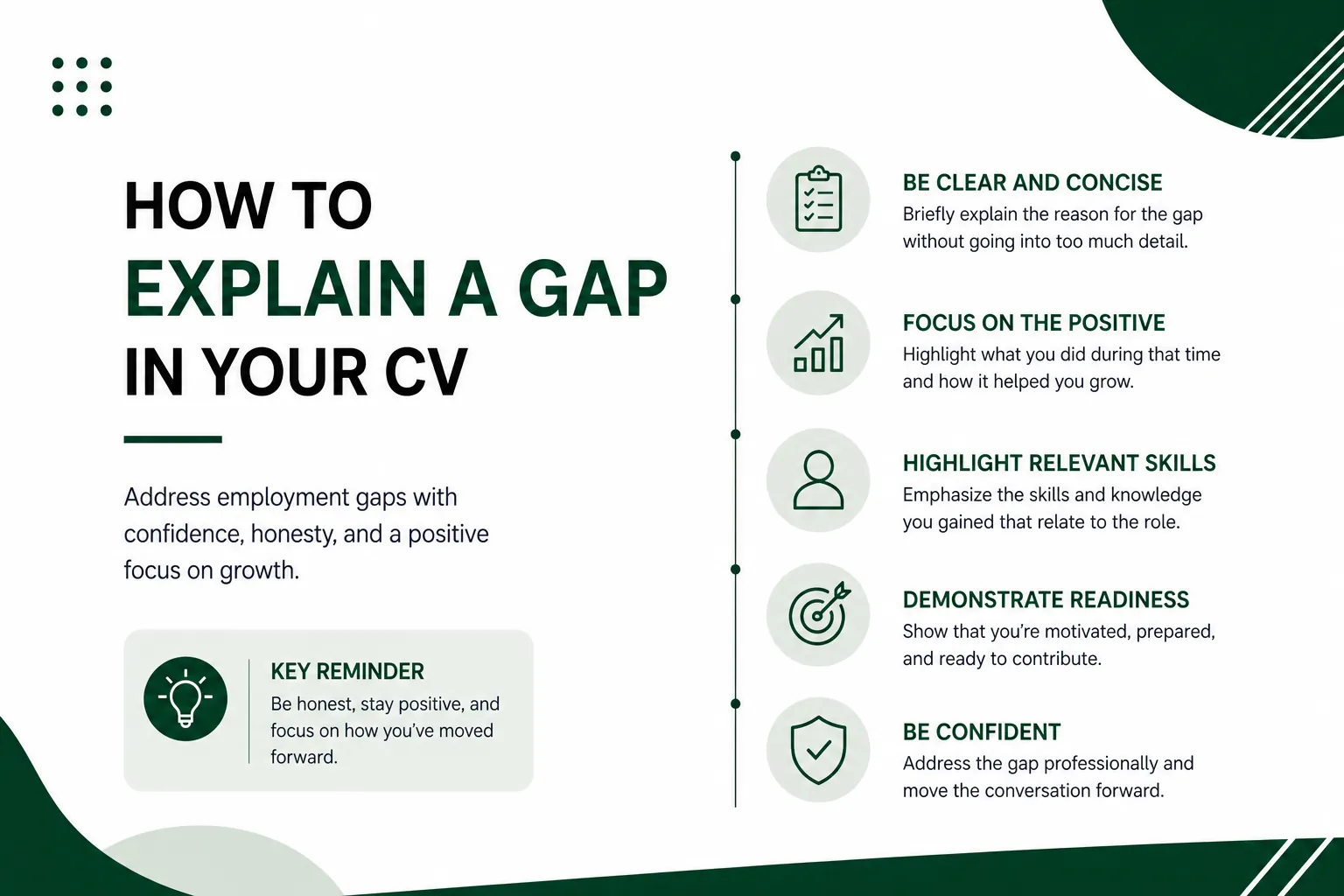
To explain a gap in your CV professionally, you should be honest, brief, and focus on what you did during that time such as learning, personal responsibilities, or improving skills. Employers understand that gaps happen, but they want to see how you used your time. You can use the template below to explain your gap clearly while applying through platforms like JobTree.
Table of Contents
- Why Explaining a CV Gap Matters
- Common Reasons for CV Gaps
- How to Explain a Gap Professionally
- CV Gap Explanation Template (Copy & Fill)
- Examples of CV Gap Explanations
- Common Mistakes to Avoid
- Final Advice for Job Seekers
- Frequently Asked Questions
Why Explaining a CV Gap Matters
How to Explain a Gap in Your CV is important because employers often notice periods where you were not working. These gaps can raise questions if they are not explained clearly. A simple explanation helps remove doubt and keeps your application strong.
Many job seekers worry that having a gap will automatically reduce their chances, but this is not always true. Employers understand that life situations can affect employment. What matters most is how you explain the gap.
Explaining your gap shows honesty and professionalism. It also allows you to control how your situation is understood. Clear communication builds trust with employers.
A gap in your CV does not mean you were not doing anything valuable. You may have been learning, helping family, or improving your skills. These experiences can still be useful in the workplace.
Using a template can help you explain your gap without overthinking or writing too much. A simple and clear explanation is usually enough. Employers prefer honesty over long explanations.
Common Reasons for CV Gaps
There are many normal reasons why people have gaps in their CV. One common reason is studying or completing a course. Education is a valid and positive reason for a gap.
Another common reason is personal responsibilities such as taking care of family members. Employers understand that family situations can require your time and attention. These situations are part of life.
Some people have gaps due to job searching or difficulty finding work. This is very common, especially in competitive job markets. Being honest about this is acceptable.
Health-related reasons can also cause gaps in employment. You do not need to give full details, but a simple explanation is enough. Privacy should always be respected.
Other reasons may include starting a small business, volunteering, or learning new skills. These activities can still show growth and effort. Employers value initiative.
How to Explain a Gap Professionally
When explaining a gap, always keep your explanation short and clear. Avoid giving too much detail or personal information. A simple explanation is usually more effective.
Focus on what you did during the gap instead of just stating that you were not working. Mention any learning, responsibilities, or activities you were involved in. This shows that your time was still productive.
Use positive language when describing your situation. Even if the gap was difficult, focus on what you learned or how you improved. A positive tone creates a better impression.
You should also be honest and avoid making up information. Employers may ask follow-up questions during interviews. Honest answers build trust.
Practising your explanation before interviews can help you feel more confident. This makes it easier to answer questions calmly. Preparation improves communication.
CV Gap Explanation Template (Copy & Fill)
Copy the template below and replace the bracket sections with your details.
During the period of [Start Date] to [End Date], I was not formally employed
due to [brief reason – for example studying, personal responsibilities, job searching].

During this time, I focused on [what you did – learning new skills, helping family,
completing a course, improving personal development].

This experience helped me develop skills such as [Skill 1], [Skill 2], and [Skill 3],
which I believe are useful in a work environment.

I am now ready and motivated to return to work and contribute positively to a company.
Examples of CV Gap Explanations
Example 1 (Job Searching):

During the period of January 2023 to December 2023, I was actively searching for employment.
During this time, I focused on improving my CV and developing my communication skills.
I am now ready to contribute to a professional work environment.

---

Example 2 (Studying):

During the period of 2022 to 2023, I was focused on completing a course in computer skills.
This helped me develop knowledge in Microsoft Word, Excel, and basic administration.
I am now ready to apply these skills in a workplace.

---

Example 3 (Personal Responsibilities):

During the period of 2021 to 2022, I was handling personal family responsibilities.
This experience helped me develop patience, responsibility, and time management skills.
I am now ready to return to work and contribute positively.
Common Mistakes to Avoid
One common mistake is trying to hide the gap completely. Employers may still notice missing dates. It is better to explain the gap clearly and honestly.
Another mistake is giving too much personal information. Keep your explanation simple and professional. You do not need to share private details.
Some job seekers also use negative language when explaining gaps. This can create a poor impression. Always focus on positive outcomes.
Making up false information can also be risky. Employers may ask questions that reveal inconsistencies. Honesty is always the best approach.
Writing long explanations can also reduce clarity. Keep your message short and direct. Simplicity improves understanding.
Be Honest, Clear, and Confident
How to Explain a Gap in Your CV is about being honest and professional while showing your readiness to work. Employers understand that gaps happen and focus more on your attitude. Confidence makes a difference.
Focus on what you learned during your gap instead of worrying about it. Every experience can teach valuable skills. Growth is important.
Using templates can help you explain your situation clearly without stress. You can adjust your explanation for different applications. This improves consistency.
Do not let a CV gap stop you from applying for jobs. Many successful candidates have had gaps at some point. Persistence is key.
Stay positive, keep improving your skills, and continue applying. Opportunities come with effort and preparation. Your next job is still possible.
Frequently Asked Questions
Is it bad to have a gap in your CV?
No, many people have gaps in their CV for different reasons. Employers understand this. What matters is how you explain it.
How do I explain a gap during an interview?
Keep your explanation short, honest, and positive. Focus on what you did during that time. Confidence is important.
Should I include a CV gap explanation in my cover letter?
Yes, if the gap is recent or noticeable. A short explanation can help avoid questions later. Keep it simple.
Can I still get a job with a CV gap?
Yes, many people get jobs with CV gaps. Employers focus on skills, attitude, and readiness to work. Keep applying and improving.
Browse more job tips on JobTree.
Read this related guide: No Experience Cover Letter.