How to Follow Up After Applying for a Job
Quick Answer
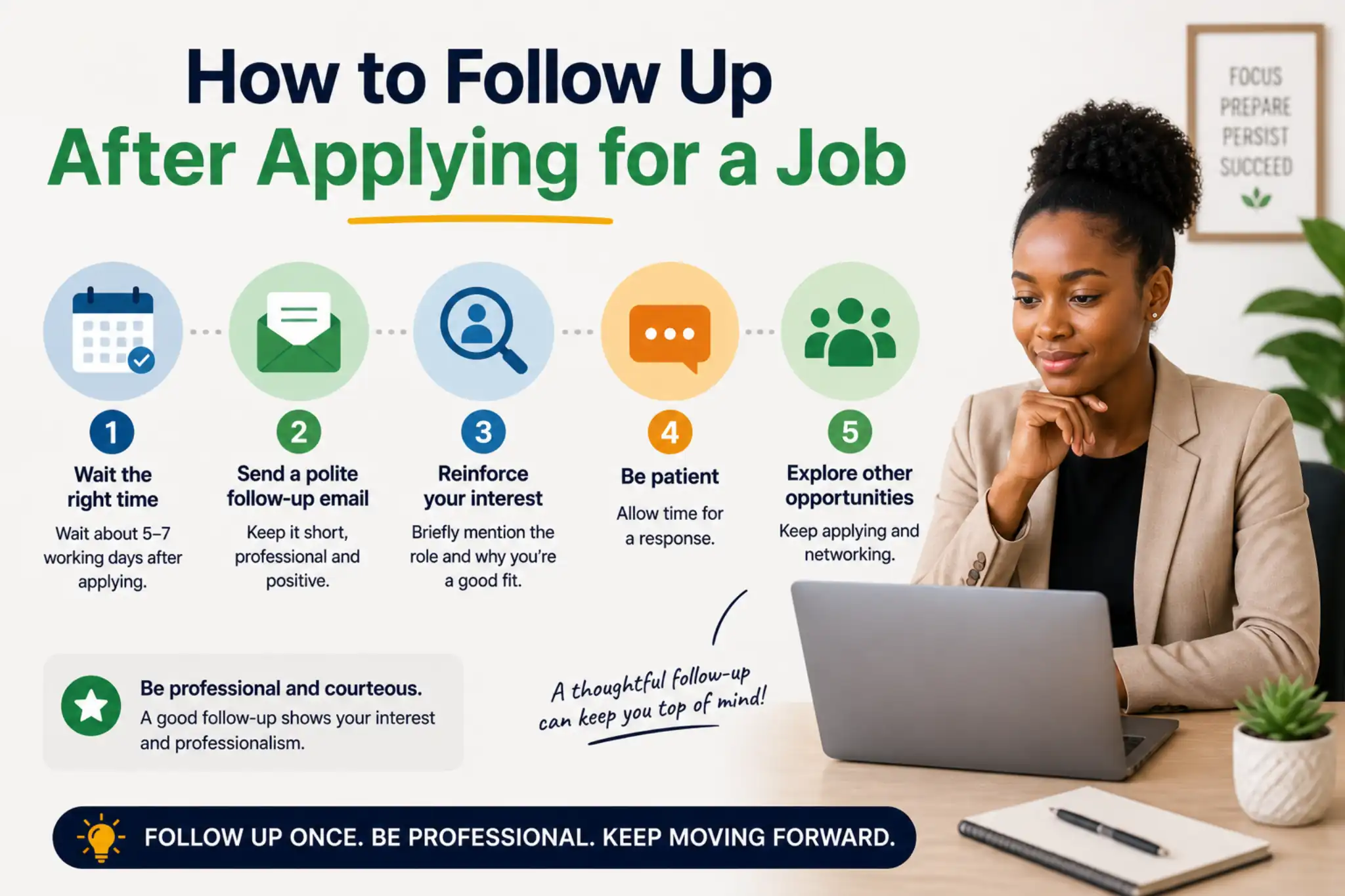
Learning how to follow up after applying for a job can help you show professionalism, confirm your interest in a role, and remind employers about your application. A good follow up should be polite, short, professional, and sent after giving the employer enough time to review applications. The best approach is to follow up respectfully while continuing your job search through trusted platforms like JobTree.
Table of Contents
- Why Following Up Matters
- When to Follow Up After Applying
- How to Write a Professional Follow Up Message
- Mistakes to Avoid When Following Up
- What to Do If You Still Get No Response
- Final Advice for Job Seekers
- Frequently Asked Questions
Why Following Up Matters
How to Follow Up After Applying for a Job is important because many job seekers are unsure whether they should contact employers after submitting applications. Following up correctly can show professionalism, confidence, and genuine interest in the role. It can also help remind recruiters about your application when they are reviewing many candidates.
Some employers receive hundreds of applications for one vacancy, especially in competitive industries and large cities. Because of this, applications can sometimes get delayed, overlooked, or reviewed slowly. A respectful follow up message can bring attention back to your CV without sounding demanding.
The seed keyword how to follow up on a job application matters because many applicants either never follow up or contact employers in the wrong way. Some people wait too long and lose opportunities, while others send repeated messages that create a negative impression. The goal is to stay professional and balanced.
Following up also helps job seekers feel more proactive during the waiting period. Instead of checking emails constantly without action, a follow up gives you a way to communicate professionally with the employer. This can reduce some of the uncertainty that comes with waiting for responses.
However, following up does not guarantee that you will get the job or receive a reply immediately. Employers may still be reviewing applications, finalising budgets, or deciding between candidates. The purpose of following up is to communicate professionally, not to pressure the employer into making a decision.
When to Follow Up After Applying
One of the most important parts of following up is timing because contacting employers too early can seem impatient. The seed keyword when to follow up after applying for a job is common because many people are unsure how long they should wait. In most cases, waiting about one to two weeks is usually reasonable.
If the job advert included a closing date, it is often best to wait until a few days after that date before following up. Many employers only begin reviewing applications once the vacancy closes. Contacting them before that stage may not help because the process may not have started yet.
Some employers include instructions about communication directly in the advert. For example, they may say that only shortlisted candidates will be contacted or that applicants should not call the office. In these situations, you should respect the instructions given in the vacancy post.
If you already had an interview, the follow up timeline may be shorter depending on what the employer told you. For example, if they said they would contact candidates within one week, it is reasonable to follow up after that period passes. Timing your message properly shows patience and professionalism.
Another factor to consider is the type of role you applied for. Urgent vacancies may move quickly, while government, corporate, or large company positions may take much longer. Understanding that hiring timelines vary can help reduce unnecessary stress while waiting.
How to Write a Professional Follow Up Message
A professional follow up message should be polite, respectful, and easy to read. You do not need to write a long explanation or repeat your entire CV. The employer should quickly understand who you are and why you are contacting them.
Start your message by greeting the employer professionally and mentioning the role you applied for. You can include the date you applied and briefly state that you are following up regarding your application. This helps the employer identify your application more easily.
Your message should also express continued interest in the opportunity without sounding desperate. You can mention that you remain interested in the role and would appreciate any updates regarding the recruitment process. Professional wording creates a better impression than emotional or demanding language.
It is also important to thank the employer for their time and consideration at the end of the message. Small professional details like politeness and gratitude can help your communication feel respectful and mature. Recruiters often notice candidates who communicate professionally.
If you follow up by email, use a clear subject line that includes the job title and your name. This makes your message easier to identify in a busy inbox. A professional email structure improves readability and organisation.
Mistakes to Avoid When Following Up
One common mistake is following up too often within a short period of time. Sending repeated messages every day or calling constantly can make you appear impatient or unprofessional. Employers need time to review applications and complete internal processes.
Another mistake is sending emotional or aggressive messages when you feel frustrated about waiting. Messages that sound angry, demanding, or desperate can damage your professional image even if your CV was strong. It is important to remain calm and respectful during communication.
Some applicants also follow up without including enough information about the application. If you only send a message saying “Any updates?” the employer may struggle to identify your application quickly. Always mention the job title and relevant details clearly.
Avoid writing extremely long follow up messages because recruiters often review many emails quickly. Your goal is not to explain your entire background again but to remind the employer professionally about your application. Short and focused communication is usually more effective.
Another mistake is stopping your entire job search while waiting for one response. Even after following up, you should continue applying for other suitable opportunities. Depending too heavily on one application can increase stress and disappointment.
What to Do If You Still Get No Response
Sometimes employers still do not respond even after a polite follow up. This can feel discouraging, especially after spending time applying carefully for the role. However, silence is common in many recruitment processes, particularly when large numbers of applications are involved.
If you receive no reply, avoid taking it as proof that you are not capable or employable. Hiring decisions depend on many factors including competition, timing, internal candidates, budgets, and employer preferences. Silence does not always reflect your actual ability.
You can use the experience to review and strengthen your overall job search strategy. Check whether your CV is relevant, your email communication is professional, and your applications are targeted properly. Small improvements over time can increase your chances of getting responses.
It is also helpful to keep records of the jobs you applied for and any follow ups you sent. Tracking applications helps you stay organised and prevents confusion later if employers contact you unexpectedly. Organisation is an important part of a professional job search.
The best approach is continuing your search while staying emotionally balanced. Some opportunities may never reply, but others may respond weeks later without warning. Consistency and patience are important during long job searches.
Professional Communication Can Strengthen Your Job Search
How to Follow Up After Applying for a Job is ultimately about communication and professionalism. A respectful follow up shows employers that you are organised, interested, and capable of professional interaction. These qualities matter in many workplaces beyond the application process itself.
Following up correctly also helps job seekers feel more active and engaged during the waiting period. Instead of feeling powerless while waiting for replies, you can communicate thoughtfully and professionally. This creates a healthier and more confident approach to job searching.
However, following up should always be balanced with patience and realistic expectations. Recruiters may still take time to respond depending on their workload and hiring process. Staying calm and respectful helps protect your professional image.
The most successful job seekers usually combine strong applications with professional communication habits. A clear CV, respectful emails, good timing, and organised follow ups all work together to strengthen your overall presentation. Small professional habits can make a meaningful difference.
Keep applying consistently, improving your communication, and following up professionally where appropriate. Even when some employers do not reply, your professionalism still helps build stronger habits for future opportunities. Persistence and communication skills remain valuable throughout your career journey.
Frequently Asked Questions
Should I follow up after applying for a job?
Yes, following up can show professionalism and continued interest in the role when done respectfully. A polite follow up message can remind employers about your application and help confirm that you are still interested. However, it is important not to contact employers too frequently.
When should I follow up after applying for a job?
In most cases, waiting about one to two weeks before following up is reasonable. If the vacancy included a closing date, it is often best to wait until after that date before contacting the employer. Timing your message properly helps you appear patient and professional.
What should I say in a follow up email?
A follow up email should briefly mention the role you applied for, the date you applied, and that you remain interested in the opportunity. The message should be polite, short, and professional without sounding demanding. Thanking the employer for their time also creates a positive impression.
What if an employer never replies after I follow up?
Some employers may still not respond because they receive large numbers of applications or have long recruitment processes. Silence does not always mean your application was poor or ignored immediately. Continue applying for other opportunities while improving your CV and communication skills.
Browse more job search advice on JobTree.
Read this related guide: What Happens After You Submit a Job Application.