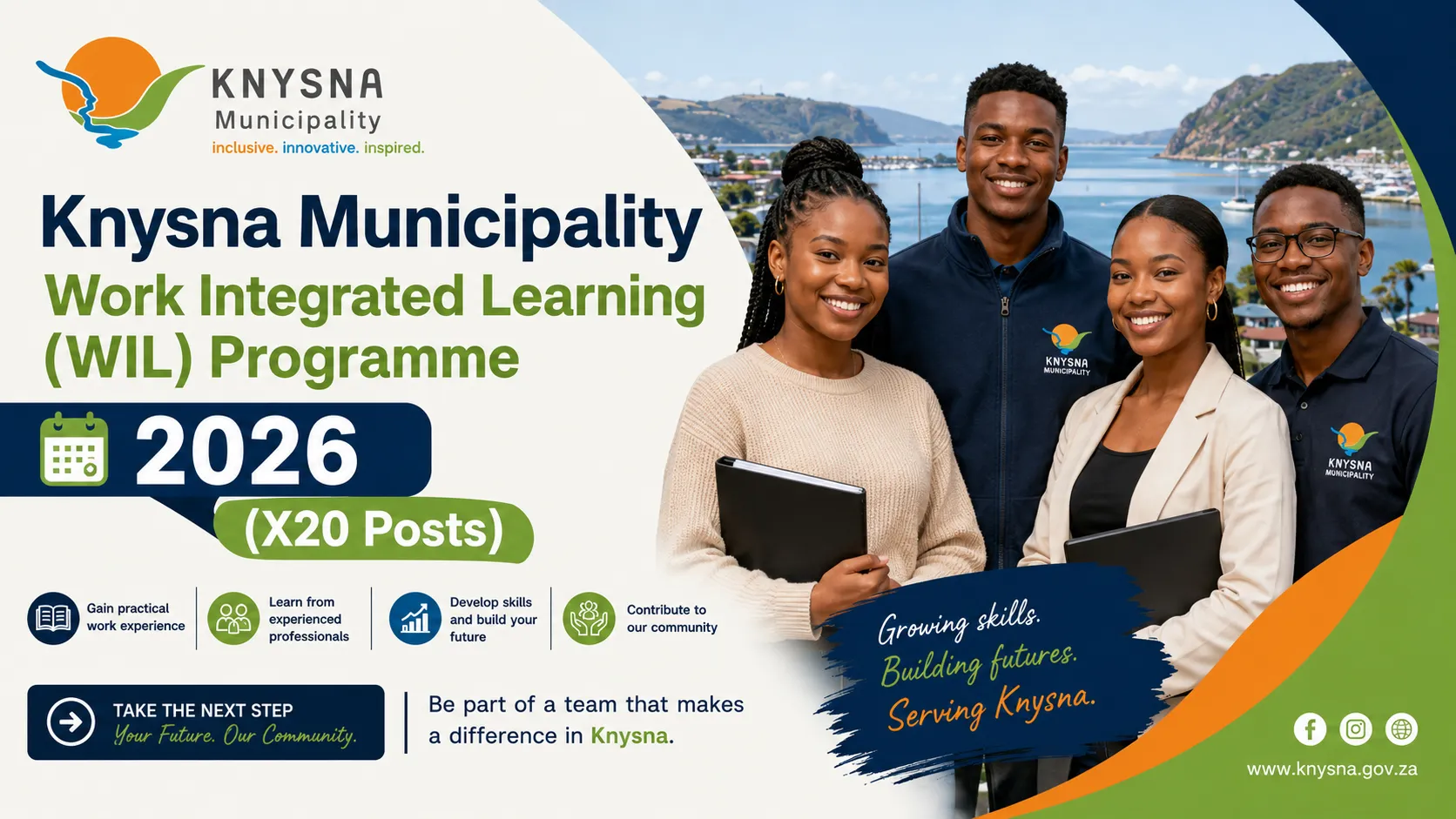
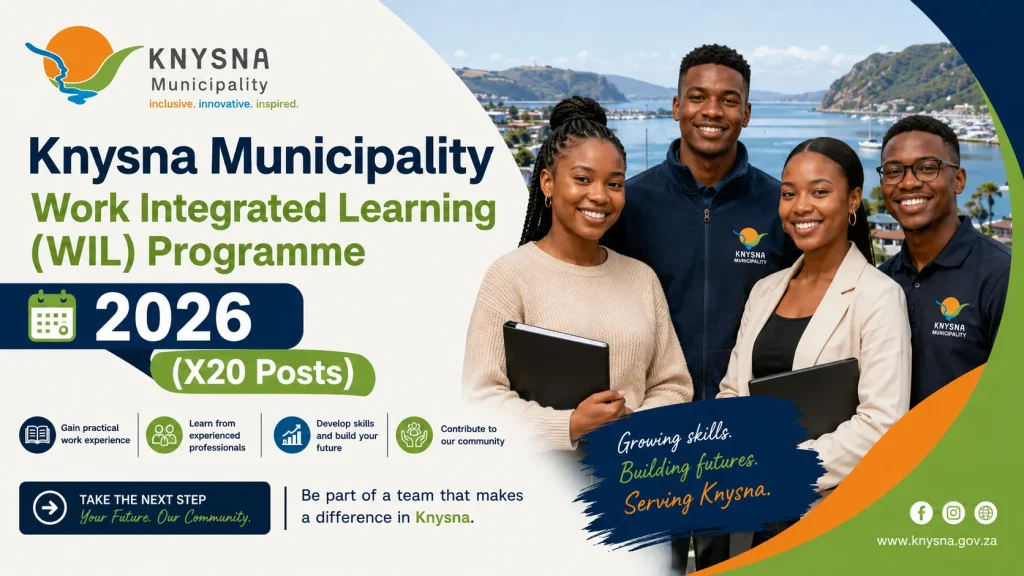
Knysna Municipality, together with the Chemical Industries Education and Training Authority (CHIETA), has opened applications for its 2026 Work Integrated Learning (WIL) Programme aimed at unemployed TVET College students and graduates who still require practical workplace experience to complete their qualifications.
For many TVET learners in South Africa, the biggest challenge comes after completing theoretical studies. Thousands of students finish N6 or National Diploma coursework but struggle to secure the practical training required to graduate fully. This programme helps address that challenge by offering selected candidates 18 months of structured workplace exposure within a municipal environment.
Programme Information
- Number of Positions: 20
- Duration: 18 months
- Location: Knysna Municipality, Western Cape
- Monthly Stipend: R8 333 Per Month
- Closing Date: 28 May 2026
What Is Work Integrated Learning?
Work Integrated Learning combines academic study with practical workplace experience.
Many TVET qualifications in South Africa, especially N6 programmes, require students to complete in-service training before they can receive their full National Diploma qualification.
This makes WIL programmes extremely valuable because they allow students to:
- gain practical work experience
- improve workplace communication skills
- learn administrative systems
- understand professional work environments
- build confidence
- strengthen their CVs
- improve future employability
Employers often prefer candidates who already have workplace exposure, which means programmes like this can help open doors to future opportunities.
Qualifications Accepted
Applications are invited from TVET College students or graduates with qualifications in the following fields:
- Public Management
- Management Assistant
- Business Management
- Human Resources
Applicants must hold:
- National Diploma qualifications, or
- N6 qualifications
The programme is specifically aimed at students who completed their theoretical coursework but still require practical workplace exposure to finalise their qualifications.
Who Can Apply?
Applicants must meet the following requirements:
- be South African citizens
- reside permanently within the Knysna Municipality area
- be unemployed
- fall within the listed qualification categories
Preference may be given to previously disadvantaged groups.
Applicants living outside the Knysna Municipality area may not qualify, which makes proof of residence important during the application process.
Documents Required
Applicants are required to submit a complete application package.
Required documents include:
- completed Knysna Municipality application form
- comprehensive CV
- certified copy of South African ID (not older than 6 months)
- certified copies of qualifications
- proof of residence
- bank statement not older than 3 months
Applicants should ensure documents are:
- clear
- certified correctly
- readable
- properly attached before submission
Incomplete applications may not be considered.
How to Apply
Applications must be submitted using the official Knysna Municipality application form.
Application Form
Applicants can download the municipal application form from the official Knysna Municipality website.
Submission Email Address
Completed applications should be emailed to:
Enquiries
Applicants may contact the Human Resources Office using the following email addresses:
Telephone Contacts
- 044 302 6486
- 044 302 6446
Closing Date
The official closing date for applications is:
28 May 2026
Late applications are unlikely to be considered, so candidates are encouraged to apply early.
Why This Programme Is Important
South Africa continues to experience high youth unemployment, particularly among graduates and TVET learners.
One of the biggest barriers facing many students is the lack of workplace exposure required to complete qualifications or secure employment.
Programmes like this help by:
- providing practical work experience
- helping students complete qualifications
- improving employability
- reducing the experience barrier
- creating networking opportunities
- exposing learners to structured government environments
This type of municipal experience may benefit candidates seeking future careers in both the public and private sectors.
Helpful Job Application Guides