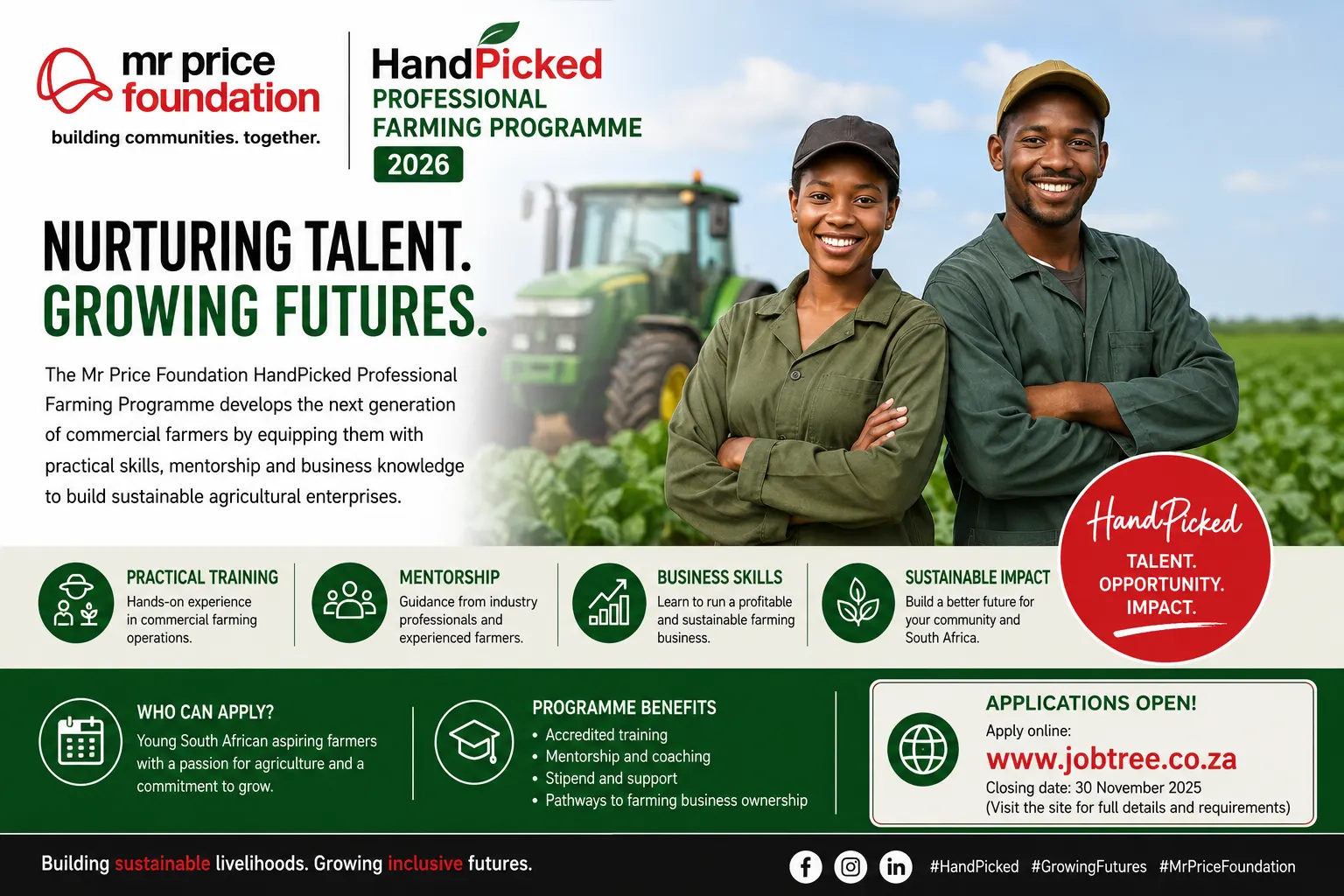
South Africa’s agriculture sector is changing rapidly. Farming today is no longer only about traditional crop production. Technology, hydroponics, climate-smart agriculture, and controlled environmental farming are creating new career paths for young people who want to work in food production and agri-tech.
The Mr Price Foundation HandPicked Professional Farming Programme is one of the opportunities aimed at helping unemployed South African youth gain practical agricultural skills, workplace exposure, and industry knowledge in modern horticulture.
This 12-month programme gives participants the chance to receive structured training, practical experience, and a monthly stipend while preparing for careers in future-focused farming systems.
For young people interested in agriculture, food security, sustainability, and agri-business, this programme could become a stepping stone into one of South Africa’s growing industries.
Quick Overview
Programme Name: Mr Price Foundation HandPicked Professional Farming Programme 2026
Programme Duration: 12 Months
Locations:
- Hammarsdale, KwaZulu-Natal
- Kenilworth, Cape Town
Monthly Stipend: R4 000
Training Includes:
- Practical farming training
- Hybrid-hydroponics incubators
- Online coursework
- NQF Level 5 credits
- Agri-tech exposure
Certification:
- Certificate of Completion from the University of Venda (UniVen)
Application Deadline: 25 May 2026
About the Mr Price Foundation HandPicked Programme
The HandPicked Professional Farming Programme is a skills development initiative designed to equip unemployed youth with practical and theoretical knowledge in modern horticulture and sustainable farming systems.
The programme focuses on preparing participants for the future of agriculture by introducing them to:
- Soil-less farming methods
- Climate-smart agriculture
- Controlled environmental agriculture
- Hydroponics systems
- Sustainable food production
Unlike many short agricultural workshops, this programme combines:
- Structured online learning
- Practical workplace experience
- Mentorship
- Industry exposure
- Career development support
Participants are trained in a way that aligns with the changing agricultural landscape, where technology and sustainability are becoming increasingly important.
What Participants Will Gain
One of the strongest aspects of this programme is that it combines both classroom learning and practical exposure.
Successful applicants will gain:
Practical Training in Hybrid-Hydroponics Incubators
Participants will receive hands-on experience in hybrid-hydroponics farming systems.
Hydroponics is a method of growing plants without soil using nutrient-rich water systems. This form of agriculture is becoming increasingly important because:
- It uses less water
- Requires less land
- Produces crops faster
- Allows farming in urban areas
- Supports climate resilience
This practical exposure can help participants develop highly marketable agricultural skills.
Online Coursework with NQF Level 5 Credits
The programme includes structured online coursework carrying NQF Level 5 credits.
This means participants do not only gain experience but also acquire recognised educational credits that may support future learning opportunities.
Certificate of Completion from the University of Venda
Participants who complete the programme successfully will receive a certificate from the University of Venda.
This adds credibility to the training and may strengthen future job applications.
Monthly Stipend
Successful candidates will receive: R4 000 monthly stipend
The stipend helps participants cover transport, food, and other daily costs while participating in the programme.
Access to Agri-Tech Exposure
Participants will gain exposure to modern agricultural technology and future-focused farming systems.
This may include:
- Controlled environmental agriculture
- Precision farming concepts
- Sustainable crop production methods
- Climate adaptation techniques
Networking and Career Connections
The programme also helps participants connect with:
- Agricultural professionals
- Mentors
- Industry stakeholders
- Future employers
Networking opportunities can become valuable when searching for permanent employment after the programme ends.
Training Modules Included
The programme covers several important agricultural and sustainability topics.
Modules include:
- Introduction to horticulture of the future
- Introduction to future-facing, soil-less vegetable farming
- Future farming versus climate change
- Growing for the future
- Planting for the future
- Feeding plants for the future
- Plant care for the future
- Controlled Environmental Agriculture for the future
These modules aim to prepare participants for the realities of modern farming and food production systems.
Eligibility Requirements
To qualify for the programme, applicants must meet the following requirements:
- Be between 18 and 33 years old
- Be currently unemployed
- Have a valid South African ID
- Have a tertiary qualification in agriculture
- Be based in Hammarsdale and surrounding areas OR Cape Town
- Be able to travel to the assigned job placement location
Applicants who do not meet all the minimum requirements may not be considered.
What Type of Candidates Are They Looking For?
The programme is specifically searching for motivated young people who are passionate about agriculture and personal growth.
Ideal candidates include:
- Individuals eager to learn
- Passionate future farmers
- Community-minded people
- Team players
- Self-motivated individuals
- Resilient and disciplined candidates
This means attitude and willingness to grow can be just as important as qualifications.
Why Agriculture Is Becoming a Major Career Opportunity in South Africa
Agriculture is often underestimated by many young people. However, modern agriculture is becoming one of the industries with strong future potential.
Several factors are increasing demand for agricultural innovation:
- Population growth
- Food security concerns
- Climate change
- Urban farming expansion
- Technology integration in farming
- Water shortages
Future farming systems will require skilled young professionals who understand:
- Sustainable production
- Smart irrigation
- Hydroponics
- Controlled environment farming
- Agricultural technology
Programmes like this aim to prepare youth for those emerging opportunities.
The Importance of Controlled Environmental Agriculture
Controlled Environmental Agriculture (CEA) is one of the biggest focus areas in modern farming.
CEA involves managing environmental conditions such as:
- Temperature
- Humidity
- Lighting
- Water supply
- Nutrient delivery
This allows crops to grow more efficiently and consistently.
As climate challenges continue affecting traditional farming, these systems are becoming increasingly important worldwide.
Young people trained in this field may find opportunities in:
- Commercial farms
- Urban farming projects
- Greenhouse production
- Agri-tech startups
- Food production companies
How This Programme Can Help Build Long-Term Careers
Although the programme runs for 12 months, the long-term value may extend far beyond the training period.
Participants may use the experience to:
- Apply for agricultural jobs
- Start small farming businesses
- Continue further studies
- Enter agri-tech industries
- Build farming cooperatives
- Work in food production systems
The combination of practical experience, certification, and networking can strengthen employability significantly.
How to Apply
APPLY FOR THE MR PRICE FOUNDATION HANDPICKED PROFESSIONAL FARMING PROGRAMME 2026 HERE
Helpful Job Application Guides