How to Verify a Job Before Applying
Quick Answer
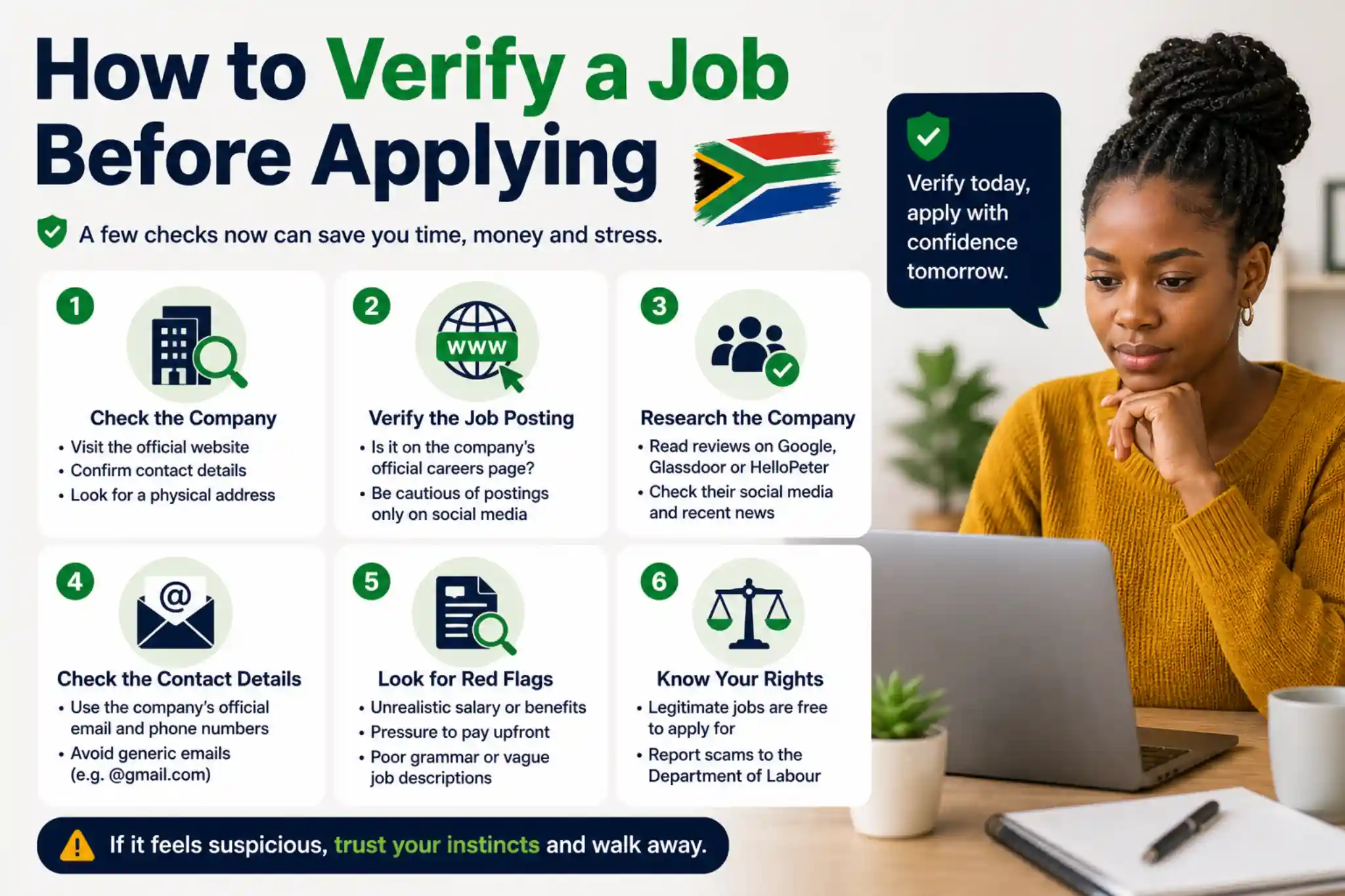
Learning how to verify a job before applying can help protect you from scams, fake recruiters, and suspicious job adverts. A safe job search usually involves checking the company website, verifying contact details, researching the employer online, and avoiding opportunities that ask for money upfront. The best approach is to stay careful, ask questions, and use trusted platforms like JobTree while searching for opportunities.
Table of Contents
- Why Verifying Jobs Matters
- Warning Signs of Fake Job Posts
- How to Research a Company Properly
- How to Verify Recruiters and Contact Details
- How to Protect Your Personal Information
- Final Advice for Safer Job Searching
- Frequently Asked Questions
Why Verifying Jobs Matters
How to Verify a Job Before Applying is important because fake job scams continue targeting job seekers across South Africa. Many unemployed people apply quickly because they urgently need work, which makes it easier for scammers to take advantage of emotional pressure. Verifying opportunities carefully can help protect your money, personal information, and time.
Some fake job adverts are designed to collect payments from applicants through registration fees, training fees, or fake placement costs. Others are created to steal personal information such as ID numbers, banking details, and addresses. Understanding how to identify suspicious opportunities helps reduce these risks significantly.
The seed keyword how to avoid fake job scams matters because scammers often copy real company names, logos, and vacancy descriptions to appear professional. A fake advert may look almost identical to a real one at first glance. This is why checking details carefully before applying is extremely important.
Job verification is also important because applying for fake jobs wastes emotional energy and creates unnecessary disappointment. Many job seekers spend time preparing CVs, attending fake interviews, or waiting for responses that will never lead to real employment. Careful research helps you focus your effort on legitimate opportunities instead.
A safe job search does not mean becoming afraid of every opportunity online. It simply means slowing down enough to check whether the employer, recruiter, and vacancy appear trustworthy. Small verification steps can prevent major problems later.
Warning Signs of Fake Job Posts
One of the biggest warning signs is a job advert that asks for money before hiring you. Requests for registration fees, application fees, training fees, uniform fees, or medical fees should immediately make you cautious. Legitimate employers usually do not demand upfront payment from applicants before employment begins.
Another warning sign is an offer that sounds unrealistically easy or too good to be true. Extremely high salaries for very little work are often used to attract desperate applicants quickly. If the salary seems far above normal market rates without explanation, the advert deserves closer investigation.
Vague job descriptions can also indicate possible scams. Real vacancies usually include duties, requirements, location details, application instructions, and company information. Fake posts often remain extremely short and focus more on urgency than actual work details.
The seed keyword how to know if a job is legitimate is important because scammers rely heavily on emotional pressure and speed. They may say the vacancy is urgent, spaces are limited, or payment must happen immediately before the position closes. Pressure is often used to stop people from thinking carefully.
You should also be careful with contact details that seem unprofessional or inconsistent with the company name. For example, a recruiter claiming to represent a major company but using a random email address or personal WhatsApp number may be suspicious. Comparing contact details with the official company website can reveal important differences.
How to Research a Company Properly
Researching the employer is one of the most effective ways to verify a vacancy before applying. Start by searching the company name online and looking for an official website. A real business should usually have company information, services, contact details, and a professional online presence.
Check whether the vacancy appears on the company’s own website or career page. If the job only appears on social media or messaging apps but not on the employer’s official channels, you should investigate further. Official career pages are usually safer and more reliable.
You can also search for reviews, news articles, or public information about the company online. While not every business will have many reviews, completely missing information may be a warning sign depending on the situation. Looking at the company’s history and public activity can help you judge legitimacy.
Another useful step is checking whether the company’s address, phone number, and email details match across different platforms. Inconsistent details may suggest that someone is pretending to represent the business. Verification becomes easier when information matches clearly across trusted sources.
If the company claims to be large or well known, search directly for its official website instead of relying only on links sent through messages or social media. Scammers sometimes create fake websites or pages that imitate real businesses closely. Going directly to the official source is usually safer.
How to Verify Recruiters and Contact Details
Recruiters and recruitment agencies should also be verified before you send sensitive information or attend interviews. A professional recruiter should usually communicate clearly, explain the role properly, and use professional contact details. Confusing communication and secrecy can be warning signs.
If a recruiter contacts you unexpectedly, ask for their full name, company name, and official contact details. You can then search for the agency online and compare the information provided. A real recruiter should not become angry or defensive when you ask professional questions.
Check whether email addresses match the company or agency domain name. Official recruitment emails are usually connected to the business website instead of random personal email accounts. While some smaller businesses may use personal emails, verification becomes even more important in those situations.
You should also be careful when communication happens only through WhatsApp without any professional follow-up. Some real recruiters may use WhatsApp for convenience, but legitimate opportunities should still include verifiable company information. Trust should come from confirmed details, not only messaging style.
Another useful step is searching the recruiter’s name on professional platforms or company pages. This can help confirm whether the person actually works for the organisation they claim to represent. Professional transparency is usually a good sign during recruitment.
How to Protect Your Personal Information
Protecting personal information is one of the most important parts of safe job searching. Your CV should include professional details like your name, phone number, email address, city, education, and work history. However, you should be cautious about sharing unnecessary sensitive documents too early.
Many fake job scams are designed to collect identity information rather than only money. Scammers may ask for ID copies, proof of address, banking details, or personal documents before any real interview or verification process happens. Sharing too much information too early can create serious risks.
You should also avoid clicking suspicious links or downloading unknown files sent by unverified recruiters. Some scams use fake forms, malware, or phishing pages to steal information from applicants. Staying cautious online protects both your identity and your devices.
If an employer requests sensitive information, ask yourself whether the request makes sense at that stage of the process. For example, banking details are usually not needed before hiring decisions are completed. Questioning unusual requests helps you stay safer.
Another good habit is keeping records of the jobs you apply for, including company names, recruiter details, and contact information. This helps you identify suspicious patterns later if something feels wrong. Organisation improves both safety and professionalism during job searching.
Careful Job Searching Protects Your Future
How to Verify a Job Before Applying is about protecting yourself while still remaining open to opportunities. The internet has made job searching faster and more convenient, but it has also created more opportunities for scams and fake recruiters. Careful verification helps you search more confidently and safely.
Real employers usually communicate clearly, provide proper company details, and explain the recruitment process professionally. While every company works differently, legitimate opportunities should still allow you to verify important information independently. Transparency is usually a positive sign.
You should never feel pressured into making rushed decisions during your job search. Scammers rely heavily on urgency, fear, and emotional pressure to stop people from checking details properly. Taking time to research opportunities protects both your money and your confidence.
Safe job searching also means balancing caution with persistence. Not every online vacancy is fake, and many real opportunities are available through trusted platforms and company websites. The goal is to stay informed rather than becoming fearful of applying altogether.
Keep improving your job search skills, verifying opportunities carefully, and protecting your personal information while applying for work. Careful habits today can prevent major problems later. A safer and smarter job search gives you a stronger foundation for future opportunities.
Frequently Asked Questions
How can I verify if a job is real?
You can verify a job by checking the company website, confirming contact details, researching the employer online, and looking for the vacancy on official company pages. Real employers usually provide clear information about the role, application process, and company background. Taking time to compare details carefully helps reduce the risk of scams.
What are common signs of fake job adverts?
Common warning signs include requests for money, unrealistic salaries, vague job descriptions, pressure to act quickly, and suspicious contact details. Fake recruiters may also avoid providing proper company information or use unprofessional communication methods. If something feels rushed or unclear, investigate further before applying.
Should I send my ID copy when applying for jobs?
You should be careful about sending ID copies or sensitive personal documents too early in the recruitment process. Legitimate employers usually do not need banking details, proof of address, or identity documents during the first application stage. Always verify the company before sharing sensitive information.
How can I avoid fake job scams in South Africa?
You can avoid fake job scams by researching employers carefully, refusing upfront payment requests, checking official websites, and using trusted job platforms. Avoid rushing into opportunities that seem too good to be true or pressure you into immediate action. Staying cautious and organised helps protect both your information and your finances.
Browse more job search safety tips on JobTree.
Read this related guide: Why You Should Never Pay to Apply for a Job.