Rejection Recovery Message Template for Job Applications (How to Respond Professionally)
Quick Answer
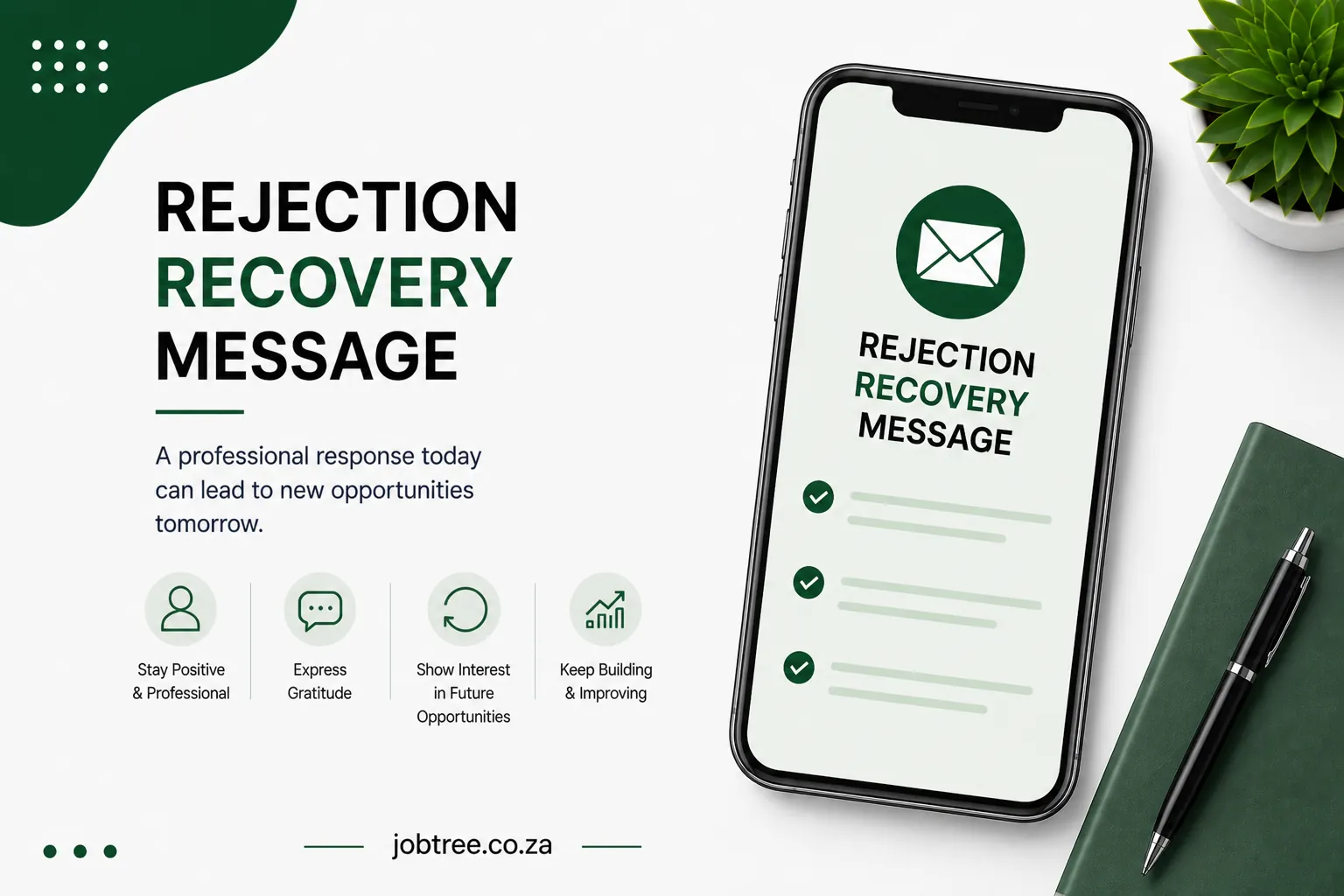
A rejection recovery message is a polite response you send after being rejected for a job to thank the employer and keep future opportunities open. It helps you maintain a professional relationship and leaves a positive impression. You can use the template below to respond correctly after a job rejection while applying through platforms like JobTree.
Table of Contents
- Why Responding to Rejection Matters
- What to Say After a Job Rejection
- Rejection Recovery Message Template (Copy & Fill)
- Example of a Rejection Response
- Common Mistakes to Avoid
- Final Advice for Job Seekers
- Frequently Asked Questions
Why Responding to Rejection Matters
A Rejection Recovery Message Template for Job Applications is important because it helps you stay professional even after receiving a rejection. Many job seekers ignore rejection messages, but responding politely can leave a strong impression. Employers may remember you for future opportunities.
Recruiters often handle many applications and may keep records of candidates who respond professionally. A simple message can show maturity, respect, and a positive attitude. These qualities are valuable in any workplace.
Sometimes candidates who were not selected may still be considered for future roles. Responding politely keeps the relationship open. This can lead to new opportunities later.
Handling rejection professionally also helps you build confidence and resilience. Job searching can be challenging, and learning how to respond correctly is an important skill. A positive mindset makes a difference.
Using a template helps you respond without overthinking or reacting emotionally. It keeps your message clear and respectful. This improves your overall communication.
What to Say After a Job Rejection
Your response should start by thanking the employer for the opportunity. This shows appreciation and respect. Even if you are disappointed, staying polite is important.
You should acknowledge the decision without questioning it or arguing. Accepting the outcome professionally shows maturity. Avoid negative or emotional language.
You can also express continued interest in future opportunities. This keeps the door open for future roles. Employers appreciate candidates who remain positive.
If appropriate, you can ask for feedback to improve your future applications. Keep this request polite and optional. Not all employers may provide feedback.
End your message with a professional closing and your contact details. A complete message leaves a strong impression. Simplicity is best.
Rejection Recovery Message Template (Copy & Fill)
Copy the template below and replace the bracket sections with your details before sending.
Dear [Hiring Manager Name / Company Name],

Thank you for informing me about the outcome of my application for the
position of [Job Title].

While I am disappointed that I was not selected, I appreciate the
opportunity to have been considered for the role.

I remain very interested in your company and would be grateful if you
could keep me in mind for any future opportunities that may be suitable.

If possible, I would also appreciate any feedback that could help me
improve my applications in the future.

Thank you once again for your time and consideration.

Kind regards,
[Your Full Name]
Example of a Rejection Response
Dear Hiring Manager,

Thank you for informing me about the outcome of my application for the
Sales Assistant position.

While I am disappointed that I was not selected, I appreciate the
opportunity to have been considered.

I remain interested in your company and would be grateful if you could
keep me in mind for future opportunities.

If possible, I would appreciate any feedback to help me improve.

Thank you for your time.

Kind regards,
Thabo Mokoena
Common Mistakes to Avoid
One common mistake is not responding at all after receiving a rejection. This can be a missed opportunity to leave a positive impression. A simple message can make a difference.
Another mistake is responding emotionally or negatively. Complaints or frustration can harm your professional image. Staying calm and respectful is important.
Some job seekers also write long messages trying to change the decision. This is not effective and can create a negative impression. Keep your message short and professional.
Ignoring grammar and spelling can also weaken your response. A clear and correct message shows attention to detail. Always review your message before sending.
Asking for feedback aggressively can also be a mistake. Keep your request polite and optional. Respect the employer’s decision.
Turn Rejection Into Opportunity
A Rejection Recovery Message Template for Job Applications helps you stay professional and positive even after a setback. This approach can leave a lasting impression with employers. It shows maturity and confidence.
Job rejection is a normal part of the job search process. Every candidate experiences it at some point. The way you respond can make a difference.
Using templates can help you respond quickly and correctly without overthinking. This improves consistency in your communication. Good habits lead to better results.
Keep applying for other jobs and improving your applications. Rejection does not define your abilities. Persistence is key to success.
Stay positive, keep learning, and continue building your skills. Every step brings you closer to the right opportunity. Professional behaviour always matters.
Frequently Asked Questions
Should I respond after a job rejection?
Yes, responding politely can leave a positive impression and keep future opportunities open. It shows professionalism and respect. A short message is enough.
What should I say after being rejected?
You should thank the employer, acknowledge the decision, and express interest in future opportunities. Keep your message simple and respectful.
Can I ask for feedback after rejection?
Yes, but you should ask politely and understand that not all employers will provide feedback. Keep your request optional and respectful.
Will responding improve my chances in the future?
It can help create a positive impression, which may lead to future opportunities. Employers remember professional candidates. It is always worth doing.
Browse more job advice on JobTree.
Read this related guide: Follow-Up Email Template.