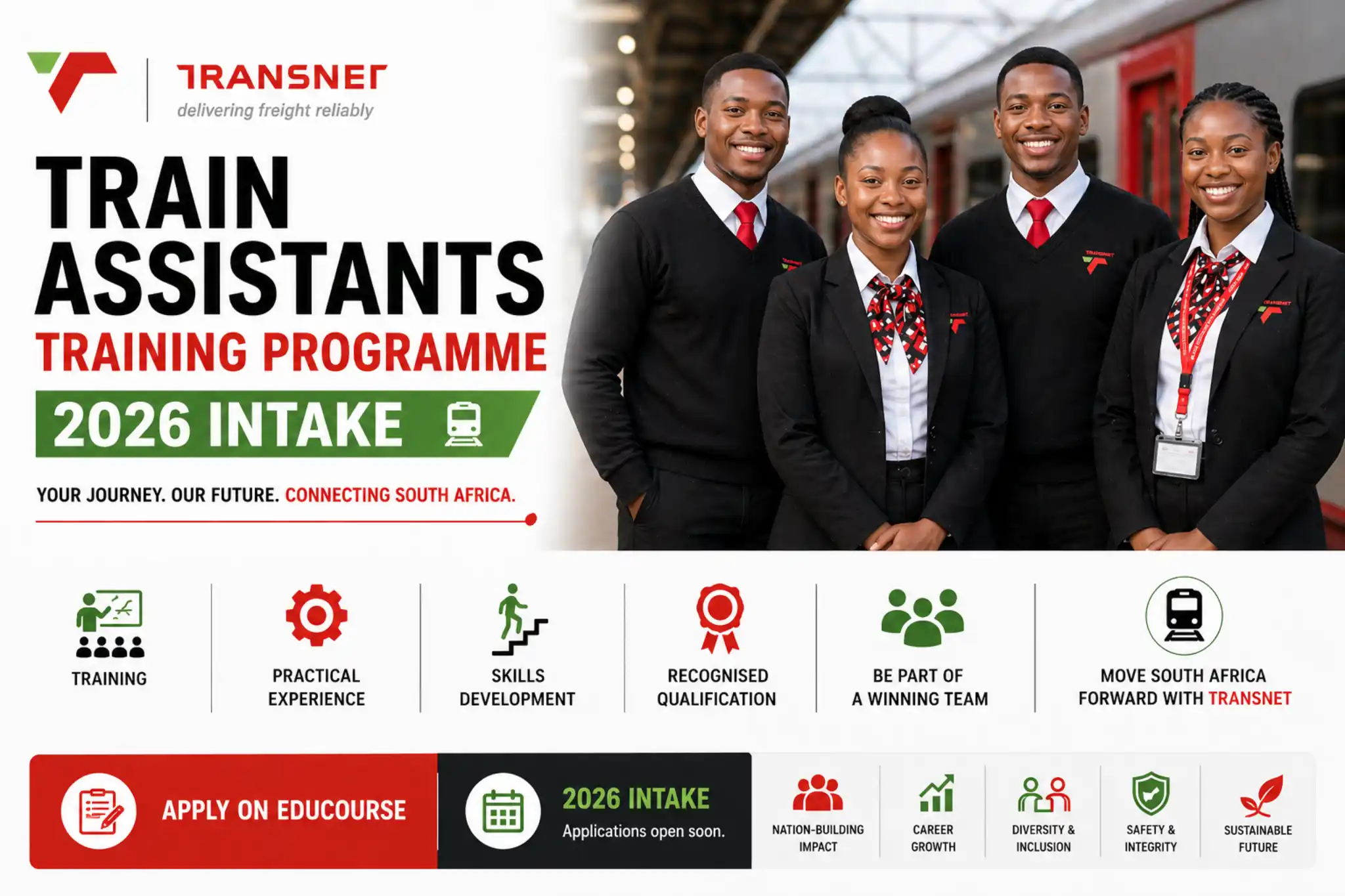
Young South Africans interested in technical railway careers now have an opportunity to join one of the country’s most important freight and logistics organisations through the Transnet Train Assistants Training Programme 2026.
Offered by Transnet Freight Rail, this structured operational training opportunity gives successful applicants the chance to enter the railway sector and build experience within locomotive operations, rail safety procedures, and freight movement systems. The programme also creates a potential pathway toward becoming a qualified Train Driver in the future.
The opportunity is based in Halfweg in the Northern Cape and is suited to disciplined individuals who are comfortable working in safety-focused operational environments.
Programme Information
- Location: Halfweg, Northern Cape
- Programme Grade: SSTP
- Salary: R6 500 per month
- Reference Number: req4845
- Closing Date: Not specified
About the Train Assistant Role
Train Assistants work alongside Train Drivers to help ensure freight trains operate safely, efficiently, and according to schedule.
The role includes a combination of:
- operational support
- locomotive preparation
- communication procedures
- safety compliance
- train movement assistance
- administrative reporting
The main objective of the role is to support the safe movement of freight locomotives while helping ensure cargo reaches its destination securely and on time.
This position plays an important role within Transnet Freight Rail’s operational network.
What Trainees Will Be Responsible For
During both training and operational duties, trainees will assist with a variety of railway procedures and safety activities.
Locomotive Preparation Tasks
Before trains depart, Train Assistants help prepare locomotives for operation.
This may include:
- signing on duty at assigned depots
- identifying the correct locomotive units
- loading required operational equipment
- assisting with locomotive startup procedures
- conducting brake tests
- preparing work areas for safe operations
These procedures form part of standard railway safety operations.
Communication System Checks
Reliable communication is essential in rail operations.
Train Assistants may assist with:
- collecting communication equipment
- testing radios and walkie-talkies
- checking telemeter functionality
- ensuring communication systems are operational before departure
Accurate communication plays a major role in railway safety.
Pre-Departure Train Inspections
Before trains begin operations, inspections must be completed to ensure compliance and safety standards are met.
Responsibilities may include:
- attaching or detaching rail vehicles
- completing operational documentation
- mounting train indicators
- inspecting train conditions
- assisting with brake system tests
These checks help ensure trains are roadworthy and compliant with railway regulations.
Shunting and Yard Support
Shunting involves moving locomotives and wagons safely within rail yards and sidings.
Learners may assist with:
- repositioning wagons
- moving trucks according to work instructions
- placing loaded or empty wagons
- removing trucks from sidings
- updating operational vehicle records
These tasks require concentration, discipline, and procedural accuracy.
Operational Support While Trains Are Moving
While trains are in operation, Train Assistants continue supporting drivers throughout the journey.
This may include:
- confirming signal positions
- monitoring train movement safety
- observing nearby locomotives
- resetting operational trip systems
- assisting during incidents or emergencies
- helping protect trains during operational disruptions
These responsibilities directly contribute to safe railway movement across the national freight network.
Administrative Duties
Train Assistants are also responsible for completing operational records and documentation.
This may include:
- train journals
- shift records
- route activity logs
- incident reports
Accurate documentation is important for operational compliance and reporting processes.
Minimum Requirements
Applicants must meet the following requirements to qualify for the programme.
Education Requirements
Candidates must have:
- Grade 12 (Matric)
- Mathematics and/or Physical Science
These subjects support the technical and operational aspects of railway training.
Medical and Physical Requirements
Because railway operations are safety-critical, applicants must:
- pass medical examinations
- meet required hearing and eyesight standards
- demonstrate mental fitness
- pass behavioural safety assessments
- be physically capable of carrying heavy equipment
- be at least 1.6 metres tall
These standards are important for railway operational safety.
Age Requirement
Applicants must be at least 21 years old before performing train-driving duties in accordance with rail safety standards.
Psychomotor Assessment Requirements
Candidates will also need to complete Vienna Testing System (VTS) assessments.
These tests evaluate:
- coordination
- reaction speed
- concentration
- observation ability
- spatial awareness
The assessments help determine suitability for railway operational environments.
Training and Certification
Successful trainees will complete both practical and theoretical training components.
This includes:
- classroom-based learning
- practical locomotive exposure
- operational railway procedures
- safety compliance training
Learners who successfully complete the programme receive certification allowing them to operate independently as Train Assistants.
This qualification is an important operational milestone within Transnet Freight Rail.
Areas Covered During Training
Participants gain railway knowledge in areas such as:
- locomotive types and classes
- railway signalling systems
- communication procedures
- depot operations
- yard movement procedures
- train working rules
- railway legislation
- infrastructure navigation
- shunting operations
The programme is designed to prepare learners for future advancement within the rail and freight sector.
Who This Opportunity Is Suitable For
This programme may suit individuals who:
- completed Matric with Mathematics or Physical Science
- are interested in railway operations
- want technical government-sector experience
- are comfortable working shifts
- want long-term careers in infrastructure and logistics
- are interested in eventually becoming Train Drivers
It is particularly valuable for applicants seeking specialised operational careers within South Africa’s transport sector.
How to Apply
APPLY FOR THE TRANSNET TRAIN ASSISTANTS TRAINING PROGRAMME 2026 HERE
Helpful Job Application Guides