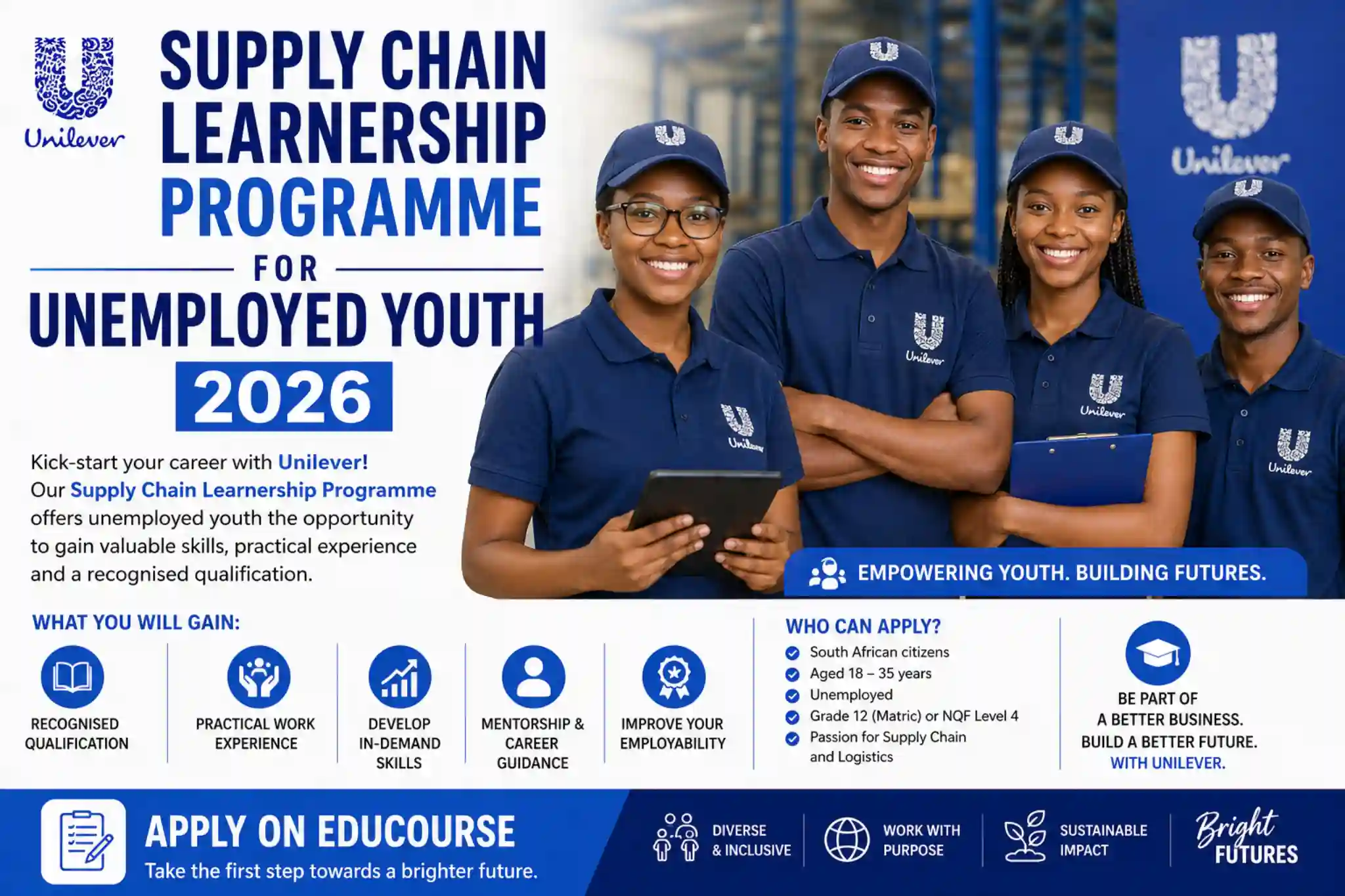
Young South Africans who want practical factory experience and technical workplace exposure now have an opportunity to enter the manufacturing industry through the Unilever Supply Chain Learnership Programme 2026.
Based at the Indonsa Factory in Durban, this 12-month learnership gives unemployed youth the opportunity to gain hands-on experience inside a real production environment while developing skills used across manufacturing, logistics, warehousing, and supply chain operations.
Participants will work within one of the world’s leading consumer goods companies while learning how modern factory operations function on a daily basis.
Programme Information
Location: Durban
Duration: 12 months
Programme Type: Factory-based workplace learnership
Stipend: Monthly stipend provided
What the Programme Focuses On
The learnership is centred around automated packaging and factory production operations.
During the programme, learners gain practical exposure to:
- packaging line coordination
- operating production machinery
- equipment inspections
- production quality monitoring
- safety procedures
- raw material preparation
- workflow and process reporting
The skills developed during the programme are used in industries such as:
- food manufacturing
- beverage production
- pharmaceutical packaging
- warehousing
- logistics operations
- FMCG processing environments
This means the workplace experience gained can be valuable across multiple industrial sectors.
What Learners Will Do Daily
Participants become part of the active production environment and assist with operational activities inside the factory.
Production and Packaging Operations
Learners assist with daily packaging and manufacturing processes using automated systems.
Tasks may include:
- helping prepare production lines
- supporting packaging targets
- loading production materials
- monitoring operational flow
This helps learners build technical production experience and operational awareness.
Equipment and Safety Checks
Before production starts each day, machinery and equipment must be inspected properly.
Learners may assist with:
- checking operational readiness
- confirming safety compliance
- inspecting equipment cleanliness
- verifying material availability
This process helps develop attention to detail and workplace discipline.
Quality Monitoring
Product quality is an important part of factory operations.
Participants may assist with:
- monitoring packaging quality
- checking product alignment
- identifying production issues
- reporting faults or irregularities
These responsibilities help learners develop problem-identification skills and accountability.
Cleaning and Hygiene Procedures
Industrial equipment must be maintained according to hygiene and operational standards.
Learners may help with:
- cleaning machinery
- supporting sanitation procedures
- maintaining hygiene standards
- ensuring production areas remain compliant
These are important requirements within FMCG manufacturing environments.
Detecting Production Problems
Learners also gain exposure to identifying operational issues before they become larger production problems.
This may include learning how to:
- identify abnormalities during production
- respond to workflow interruptions
- escalate faults to supervisors
- reduce downtime and product waste
These technical skills are highly valued across manufacturing industries.
Workplace Safety Support
Factories operate under strict safety procedures.
Participants may assist with:
- PPE compliance
- maintaining safe working environments
- workplace hazard awareness
- incident reporting procedures
This exposure helps prepare learners for future technical and industrial roles.
Sustainability and Environmental Practices
Modern manufacturing environments place strong focus on sustainability.
Learners may gain experience in:
- waste reduction practices
- responsible material usage
- environmentally conscious processes
- sustainable production standards
These practices are becoming increasingly important across industrial sectors.
Minimum Academic Requirements
Applicants must meet one of the following requirements:
Option 1
Matric with:
- Mathematics
- Physical Science
Option 2
An Engineering qualification such as:
- N2
- N3
- N4
These subjects are important because the programme includes technical production and machine-related responsibilities.
Personal Qualities Unilever Looks For
Unilever values both qualifications and workplace attitude.
Successful applicants often demonstrate:
- reliability
- teamwork
- accountability
- communication skills
- willingness to learn
- resilience under pressure
- strong attention to detail
The company also values candidates who can solve problems, interpret information, and identify opportunities for improvement.
Who Should Apply?
This learnership may be suitable for you if you:
- are currently unemployed
- live near Durban or can relocate independently
- studied Mathematics and Science
- completed an engineering qualification
- want technical workplace exposure
- are interested in manufacturing or supply chain careers
The programme is especially valuable for individuals building their first industrial work experience profile.
Opportunities After Completing the Programme
Although permanent employment is not guaranteed, learners who perform well may improve their chances of accessing opportunities such as:
- factory operator positions
- packaging technician pathways
- warehouse operations roles
- logistics assistant positions
- maintenance support opportunities
- internal contract roles
The workplace experience gained can strengthen future employability across manufacturing and supply chain industries.
Important Location Information
The programme takes place at the Indonsa Factory in Durban.
Applicants should note that Unilever does not provide relocation assistance.
Successful candidates will need to:
- already live near Durban
- or relocate at their own expense
Planning transport arrangements early may help if selected for the programme.
APPLY FOR THE UNILEVER SUPPLY CHAIN LEARNERSHIP PROGRAMME FOR UNEMPLOYED YOUTH 2026 HERE
Helpful Job Application Guides